
Scout found a gap in my fence exactly once, on a Tuesday morning in November, and covered about four blocks before a neighbor called me. He is a four-year-old beagle mix, 22 pounds, and he treats any interesting scent like a moral obligation. After that Tuesday, I stopped relying on the fence and started researching GPS trackers. I sorted through a lot of options before landing on the Tractive GPS Dog Tracker. That was six months ago. Scout has worn it almost every day since, in the rain, on hikes, and through two rounds of batteries. This review covers what I actually found.
I want to be clear about the framing here. This is a cellular GPS tracker, which means it uses phone network coverage to send Scout's location to my phone in real time. That is genuinely different from a Bluetooth tracker like an AirTag, and it is also genuinely different from older radio-frequency pet trackers. The Tractive device retails around $79 and requires a subscription to work. I will get into the subscription cost in detail, because it matters to the math of owning this thing.
The Quick Verdict
Solid real-time GPS tracker for dogs who roam. The live tracking works as advertised, the app is reliable, and the subscription is priced fairly. Battery life in live mode is the main tradeoff to know going in.
Amazon Check Today's Price →Scout's worn this tracker for six months. If you want to stop guessing where your dog is, here is the current price.
The Tractive GPS Dog Tracker ships with the hardware. Subscription is separate. Check today's price on Amazon before you decide.
Amazon Check Today's Price on Amazon →How I Have Used It
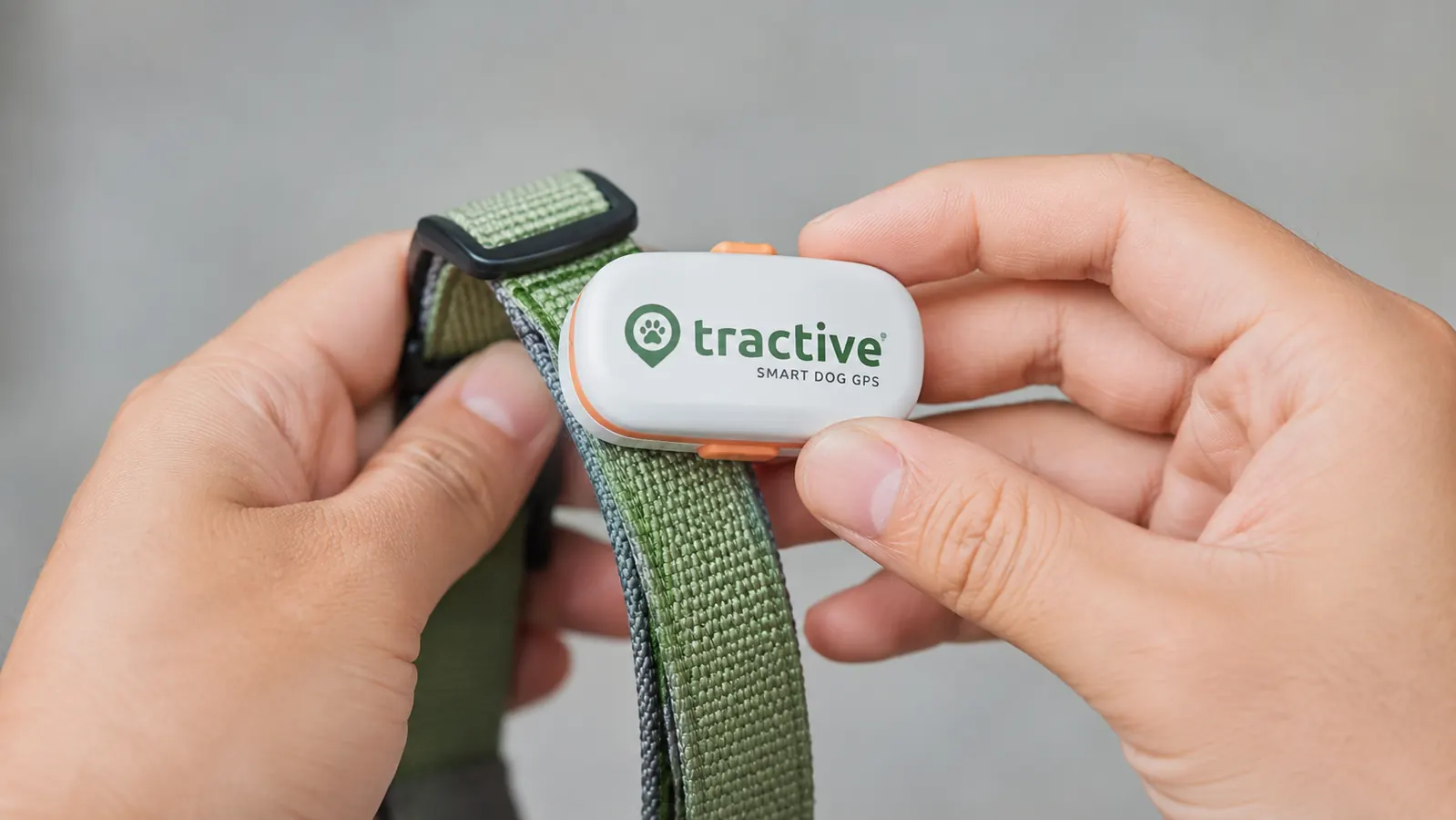
Scout wears the Tractive tracker clipped to a standard 1-inch nylon collar. The device itself is about the size of a thick matchbook, 35 grams, which sits well on a dog his size. I would not recommend it for dogs under about 15 pounds; it is proportionally a lot of hardware for a small neck. For Scout at 22 pounds it is fine. He does not seem to notice it.
For the first two months I kept live tracking on most of the time, watching the map during off-leash time at a nearby park. After that I switched to the default mode, which updates his position every few minutes rather than continuously, and I use the live mode button in the app when I actually need second-by-second updates. That change stretched my battery life significantly, which I will cover below.
The virtual fence feature, called Safe Zones in the Tractive app, is the piece I use most. I drew a boundary around my yard and the app sends a push notification when Scout crosses it. In six months I have received four alerts. Two were false positives when Scout was near the fence line and signal drifted slightly. Two were real escapes caught early, including one at 10 PM that I would not have known about until morning. Those two catches alone justify the subscription for me.
Real-Time Tracking Accuracy: What to Expect
Cellular GPS accuracy depends on where you are. In my suburban neighborhood with good LTE coverage, Tractive places Scout within about 10 to 15 feet of his actual position during live tracking mode. That is close enough to walk straight to him. In a heavily wooded area about 20 minutes from my house, accuracy dropped to roughly 30 to 50 feet and occasionally lost signal entirely for 30-second windows before reconnecting.
The Tractive app displays a location accuracy ring around the dot on the map, which is honest and useful. When the ring is tight, the location is solid. When it expands, you know you are getting an estimate. I appreciated that transparency rather than having the app pretend it knows exactly where Scout is when signal is weak.
One important limitation: Tractive uses cellular coverage, so it will not work reliably in areas with no cell signal. If you hike in backcountry wilderness with no coverage, you need a different product entirely. For suburban neighborhoods, rural areas with decent coverage, and most parks, it performs well. My husky Loki, who I had before Scout, would have needed something different given how far into the mountains I take him. Scout stays closer to civilization, so Tractive fits.
Two real escape alerts in six months. One at 10 PM that I would not have known about until morning. Those two alone justify the subscription.
Battery Life: The Honest Numbers
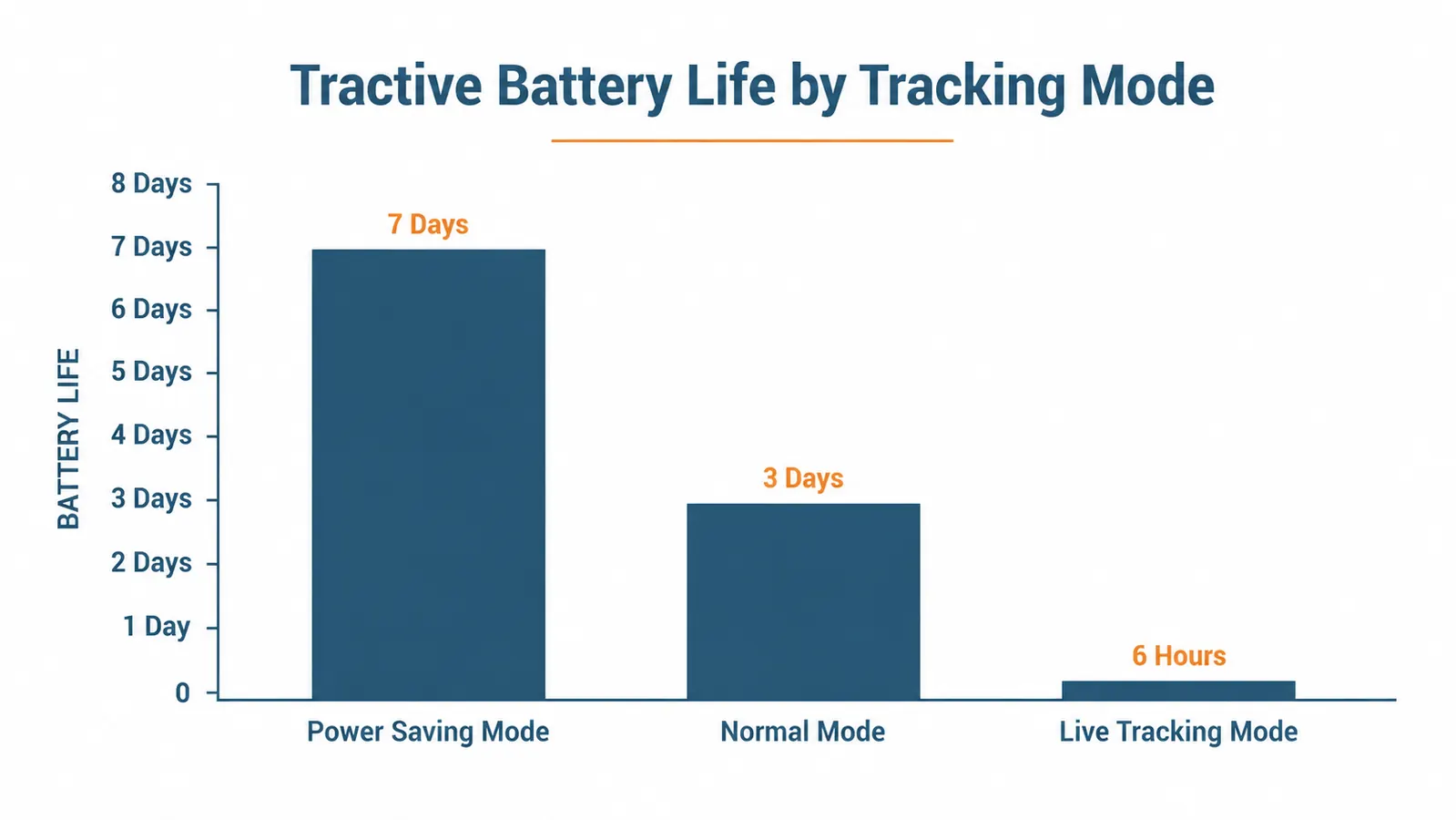
Battery life is the biggest practical variable with this tracker, and it depends almost entirely on which mode you are using. In power-saving mode, where the tracker updates location every few minutes, I consistently get five to seven days per charge. In the default normal tracking mode, which updates more frequently, I get two to three days. In live tracking mode with updates every two to three seconds, the battery runs down in roughly five to six hours.
That sounds alarming if you plan to leave live mode on all day. The realistic use case is: leave the tracker in normal mode for daily life, switch to live mode when you actually need it, like at a dog park or after a safe-zone alert fires. Charging takes about an hour and a half via the magnetic USB cable included with the device. I charge Scout's tracker every Sunday evening as a habit, which fits easily into normal mode use.
The tracker is rated IP67 waterproof. Scout swam in a creek twice and got caught in a downpour once over the six months. No issues. The charging port is protected by a rubber seal that holds up fine with normal care.
The Subscription: What It Costs and What You Get
The Tractive subscription is the part that requires an honest conversation. The tracker hardware does nothing without an active plan. Plans run roughly $6 to $13 per month depending on whether you pay monthly or annually and which tier you choose. The lowest tier covers basic live tracking and safe zones. The higher tiers add location history, wellness tracking, and family sharing for up to ten users.
I pay the mid-tier annual rate, which works out to about $8 per month, or $96 per year. Added to the hardware cost, year one comes to roughly $175. Year two is $96 assuming the price holds. That is the real math. For some people that is fine. For others it is a dealbreaker and they should look at a no-subscription option like an AirTag instead, understanding the tradeoffs in real-time tracking capability.
Tractive does not lock you into a long contract. You can cancel monthly. The annual rate saves about 40% versus monthly billing, so if you are going to use it, paying annually is the obvious choice. Just know that without an active subscription the tracker is a $79 paperweight.
The App and Vital Signs Feature
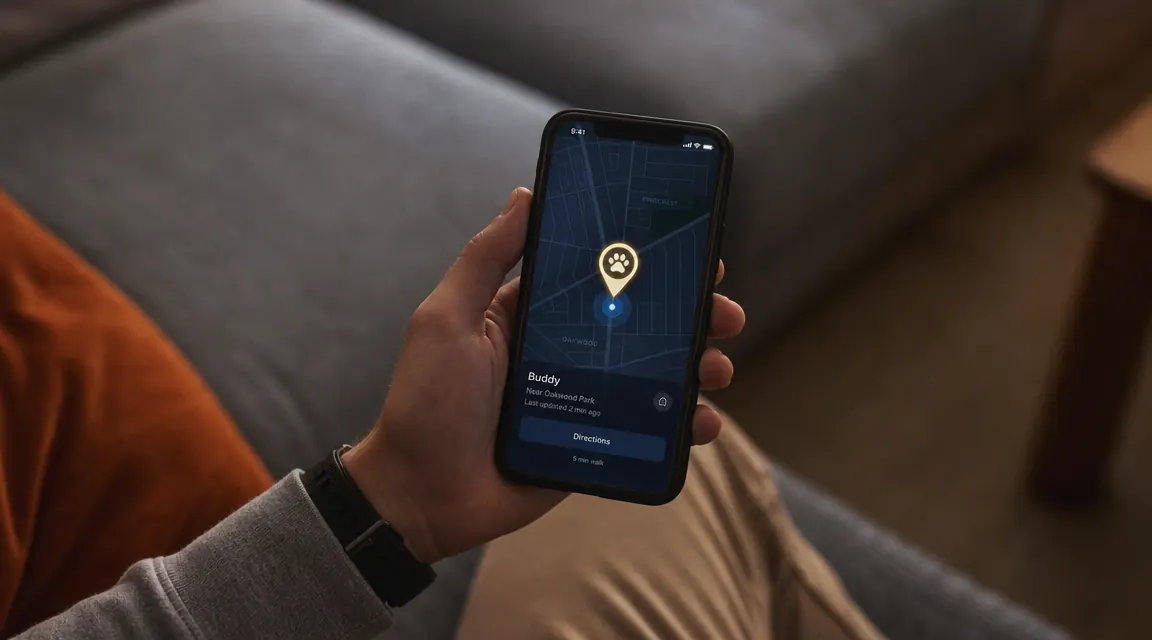
The Tractive app runs on iOS and Android. It is reliably fast. Tapping the live tracking button on my phone shows Scout's location within about five seconds of the device acquiring signal. The interface is clean, with a full-screen map view, a battery indicator for the tracker, and simple toggles for safe zones. I have never had the app crash in six months of regular use.
The current generation of this tracker also includes vital signs monitoring, specifically heart rate and respiratory rate measurement. I tested this feature and found it useful as a general health check but not precise enough to replace veterinary monitoring. It gives you a baseline over time, which is more valuable than a single reading. Scout's resting heart rate averages around 68 to 72 beats per minute according to the app, which aligns with what my vet tells me is normal for his size.
Alternatives I Considered
Before buying the Tractive, I looked seriously at three other options. The Apple AirTag is the obvious no-subscription alternative. It uses Bluetooth and Apple's Find My network, which works well in dense urban areas where other iPhones are nearby but falls short in rural or suburban settings where coverage is sparse. For a beagle with escape tendencies, I needed real-time GPS, not crowd-sourced location. You can read more about how those two compare in our Tractive vs Whistle comparison.
The Fi Series 3+ collar is the other serious contender in the cellular GPS space. It adds step counting and health metrics in a more integrated collar design rather than a clip-on device. It also costs significantly more upfront. For a dog who already has a collar he loves and an owner who mainly wants location tracking, the Tractive made more sense financially. If you want a combined GPS-plus-health-monitoring collar from day one, Fi is worth considering.
I also looked at the Garmin Alpha system, which is built for hunting dogs and works without cellular coverage. It is excellent for off-grid use. It costs significantly more and is overkill for a suburban beagle who mostly needs a safe-zone alert and the occasional park tracking session.
What I Liked
- Live GPS tracking updates every 2 to 3 seconds in live mode, accurate to 10 to 15 feet in good coverage areas
- Safe zone alerts are reliable and fast, fires within about 30 seconds of a boundary crossing
- IP67 waterproof rating holds up to swimming and rain without issue
- App is clean, fast, and has never crashed in six months of use
- Subscription is month-to-month with no long-term lock-in
- Vital signs monitoring adds useful baseline health data over time
- Works in most suburban and rural coverage areas, not just cities
Where It Falls Short
- Battery drops to 5 to 6 hours in continuous live tracking mode
- Requires active subscription to function at all, hardware alone does nothing
- Cellular coverage gaps mean it is not reliable in true backcountry wilderness
- At 35 grams, too bulky for dogs under roughly 15 pounds
- Two false-positive safe zone alerts in six months, caused by minor GPS drift near fence lines
- Year-one cost including hardware and subscription is around $175

Who This Is For
The Tractive GPS tracker is the right choice if your dog has escape tendencies, lives near a busy road, or joins you on hikes and off-leash outings in areas with cell coverage. It is also a good fit if you share dog care with a partner or family members and want everyone to be able to see the dog's location in the same app. The 10-user family sharing feature is genuinely useful for households where multiple people walk the dog.
It is a particularly strong fit for scent-driven breeds. Beagles, hounds, and similar dogs follow their noses and can cover surprising distance in a short time. A tracker that updates every few seconds in live mode is meaningfully better than one that pings every few minutes when you are trying to intercept a dog mid-chase. For those breeds, the live tracking capability is the entire value proposition.
Who Should Skip It
If your dog is small, under 15 pounds, the size and weight of this device will feel disproportionate on the collar. There are smaller dedicated cat trackers that suit lighter animals better. If your dog primarily hikes with you in areas with no cell service, the Tractive will lose signal exactly when you need it most. The Garmin Alpha system is built for that scenario instead.
If the $8 to $13 monthly subscription is a stretch on your budget, look at the AirTag 4-pack or a radio-frequency tracker with no ongoing cost. The Tractive works well, but not so much better than free-to-use alternatives that the subscription is worth straining a budget over. Pick the tool that matches both your dog's behavior and your financial situation honestly. Our piece on 10 reasons a real-time GPS collar is worth the monthly fee walks through the specific scenarios where the subscription math actually works in your favor.
Six months in, Scout still wears it every day. If your dog has ever given you a scare, here is where to check today's price.
The Tractive GPS Dog Tracker is currently available on Amazon. Subscription plans are purchased separately through the Tractive app after setup. Ships quickly via Prime.
Amazon Check Today's Price on Amazon →