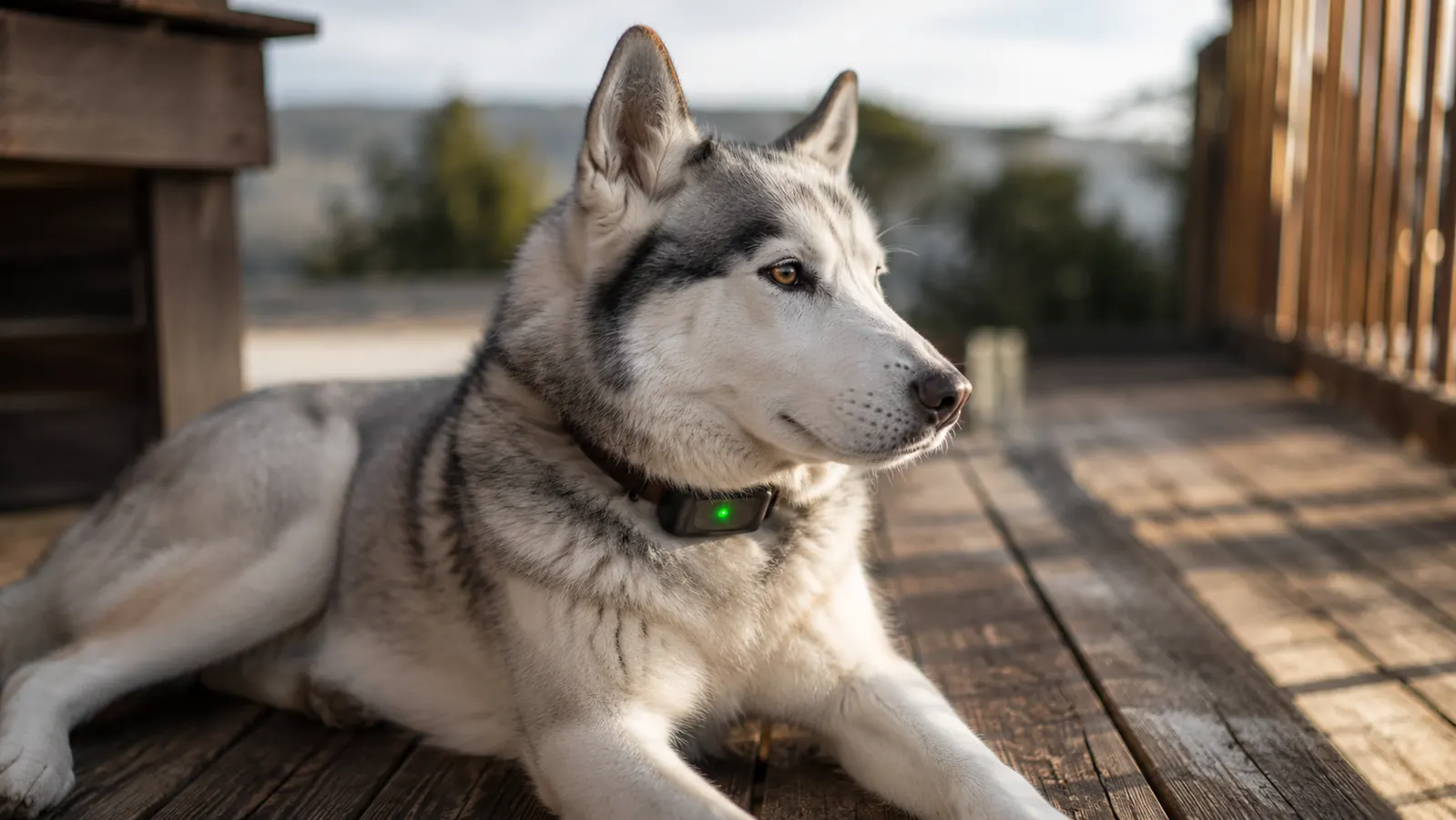
Loki is eight years old. He is a Siberian husky, 62 pounds, and he has been my shadow since I brought him home as a puppy. I have walked him twice a day for eight years. I know his moods, his preferences, and the way he slows down at the corner where a lab once barked at him. I thought I knew everything about how he was feeling. Then I started looking at the numbers.
We got the Fi Series 3+ last fall. The honest reason: I wanted real-time GPS because Loki had slipped his collar once on a trail and I never want to feel that stomach-drop panic again. The collar uses cellular GPS, so his location shows up on my phone with a live dot, updating as he moves. That alone was worth it. But the health monitoring data turned out to be the part that actually changed how I care for him.
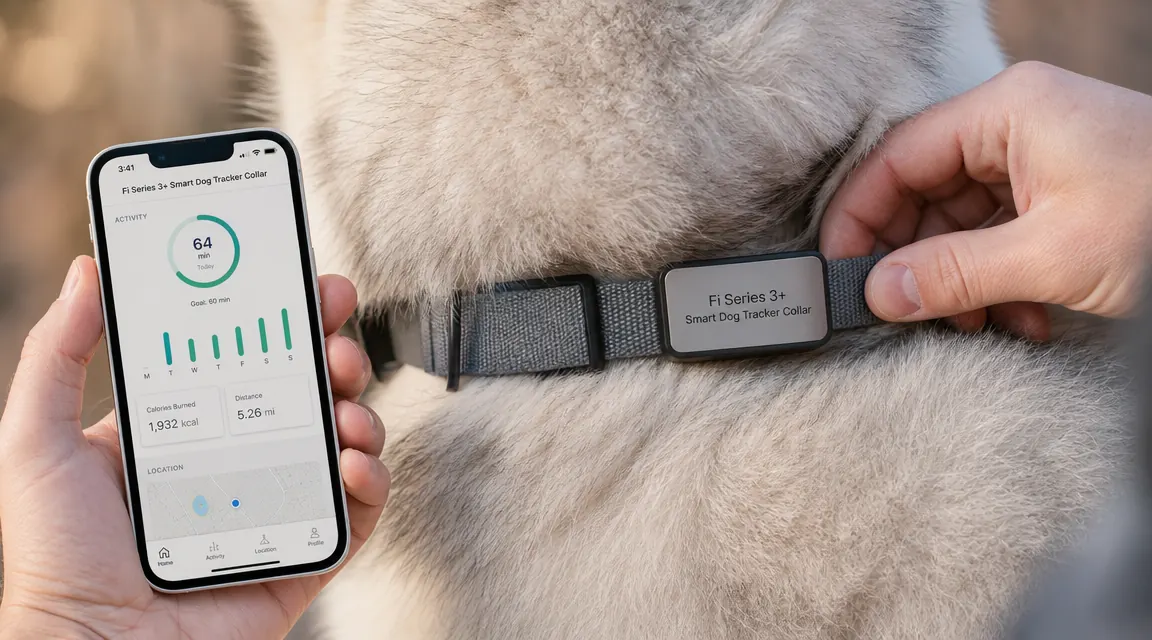
The Fi app tracks daily step counts, sleep quality, and activity minutes. When you first set it up, it builds a baseline over two weeks, averaging what your dog normally does. Then it starts flagging deviations. I did not think much of this feature when I enabled it. I figured it would just confirm what I already knew: Loki is active, Loki sleeps well, Loki is fine.
In July, the app sent me a notification I almost dismissed. It said Loki's average daily steps had dropped 22 percent over the past 10 days compared to his baseline. I scrolled back through the chart and saw it clearly. Two and a half weeks of lower step counts, right in line with the hottest stretch of the summer. I told myself it was the heat. Huskies do slow down when it is hot. I adjusted the walking schedule and moved on.
His sleep data started showing something I had no frame of reference for on my own: more restless periods, more position shifts in the night, fewer long stretches of deep rest.
Then in September, when the temperatures dropped back into the 60s, his step count did not come back up the way I expected. I watched for two weeks. The baseline stayed low. Around the same time, the sleep data started shifting. The app tracks sleep quality in broad terms, noting restless versus settled periods throughout the night. Loki had always been a good sleeper. But over those same weeks, the sleep chart started showing more restless segments. More frequent position changes. Fewer long stretches of settled rest. He was not yelping. He was not limping. He was just a little quieter than usual, and I had started to tell myself that was normal at eight.
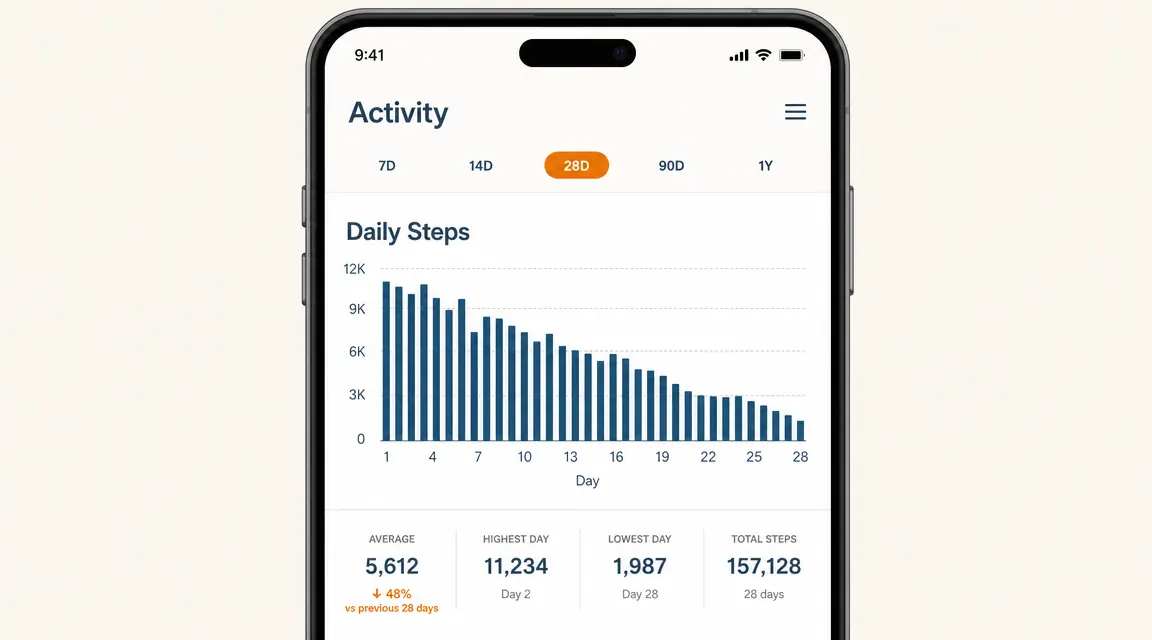
I made a vet appointment, not because anything was obviously wrong, but because I had the data in front of me and I could not explain it away anymore. I brought screenshots of the step count chart and the sleep graph. My vet looked at them for a long moment and then said she was glad I had come in. X-rays showed early-stage bilateral hip dysplasia. Not severe. Caught early enough that we could start managing it before it became a real problem, with a combination of joint supplements, adjusted exercise, and a prescription anti-inflammatory on harder days.
My vet told me that a lot of dogs with hip dysplasia in early stages do not show obvious signs until the issue has progressed significantly. The dog compensates. The owner adapts without realizing it. She said the two data points I brought, the sustained step count drop and the shift in sleep quality, were exactly the kind of pattern she would want owners to notice sooner. I noticed it because the Fi collar made it impossible to miss.
Loki has a GPS tracker and a health monitor in one collar. You can get both for your dog too.
The Fi Series 3+ combines real-time cellular GPS with daily step counting and sleep monitoring. The 12-month membership is included in the purchase. Set it up in under 10 minutes, and the app starts building your dog's health baseline automatically.
Amazon Check Today's Price on Amazon →I want to be honest about what the Fi collar is and what it is not. The GPS side of it is real cellular tracking, not Bluetooth, not a find-my-community network. When Loki is in the yard, at the park, or three blocks away from me on a trail, I can see exactly where he is on a map, with location updates every few seconds. That is the feature I bought it for originally, and it works the way it promises to. The health data is not a medical diagnostic tool. The app does not tell you your dog has hip dysplasia. It tells you that something has shifted from the normal pattern, and that shift is worth paying attention to.

What I had before the collar was a general sense that Loki was doing okay. What I have now is a record. I can look at any week over the past eight months and see how active he was, how well he slept, how many miles we covered. I can see the week he had a stomach bug and his steps dropped. I can see the weeks after his hip dysplasia diagnosis when we were adjusting his exercise load. I can see that his sleep quality has improved since we started the joint supplements. None of that was visible to me before. I was just going day to day and hoping I would notice if something was wrong.
What I Would Tell You If We Were Sitting at My Kitchen Table
If you asked me whether a $189 GPS collar with health monitoring is worth it for a healthy young dog, I would probably say: maybe wait. But if your dog is getting older, or has a breed predisposition to joint issues, or is the kind of dog you would drive an hour to the emergency vet for at midnight, the answer is different. The location tracking alone is worth a lot of peace of mind. The health data turned out to be worth something I could not have predicted. It gave me the evidence to act before Loki started hurting in ways I could see. That is not a small thing.
He still slips out the side gate sometimes when the latch does not catch. I get an alert within about 30 seconds and I can watch him on the map as he makes his way to the neighbor's yard where she always has treats. I go get him, he is unimpressed, and we go home. That used to terrify me. Now it is almost a routine. Between the GPS tracking and the health data, I feel like I actually know what is going on with him for the first time. Not just guessing. Knowing.
If Loki's story sounds familiar, the Fi Series 3+ is worth a closer look.
Real-time cellular GPS plus step counting, sleep quality tracking, and activity baselines in one collar. Works on dogs 25 lbs and up. Includes 12 months of membership.
Amazon Check Today's Price on Amazon →