
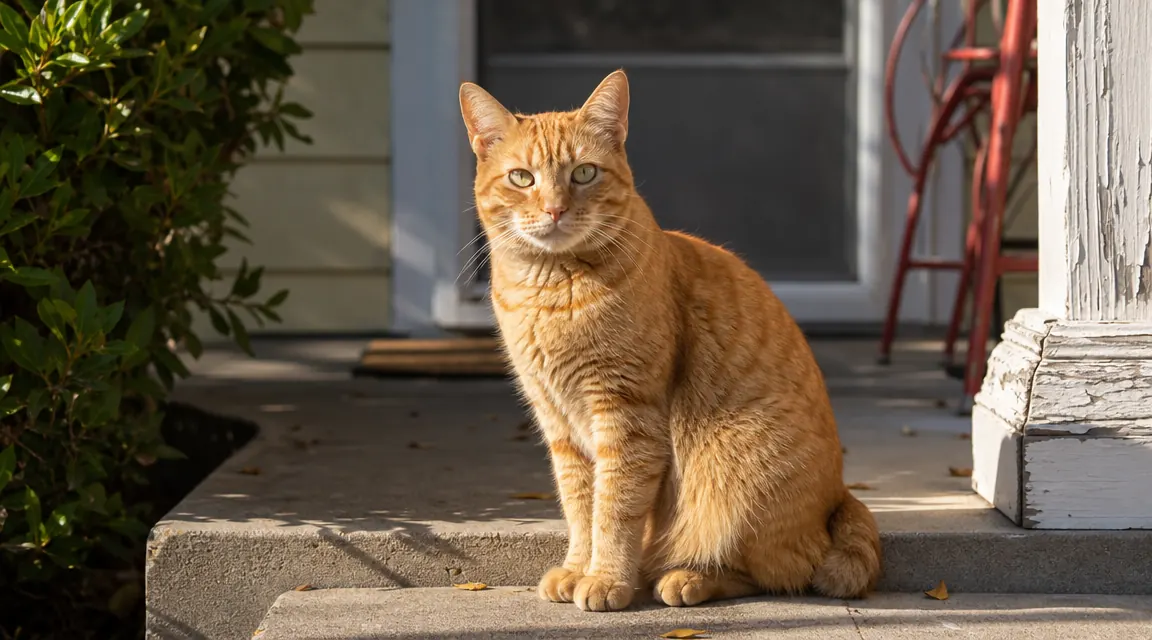
June has been an indoor cat for every one of her seven years. She has never once asked to go outside. She is the kind of cat who naps in a sunbeam and treats the back door like a suggestion she has always been too comfortable to take. So when I turned around in the kitchen on a Thursday afternoon and she was just gone, my first thought was not that she had escaped. My first thought was that I had not looked hard enough.
I looked for forty minutes. Under every bed, inside every closet, behind the couch, inside the cabinet under the bathroom sink where she once spent an entire morning in 2021. Nothing. Then I noticed the back door was open a crack. My stomach dropped.
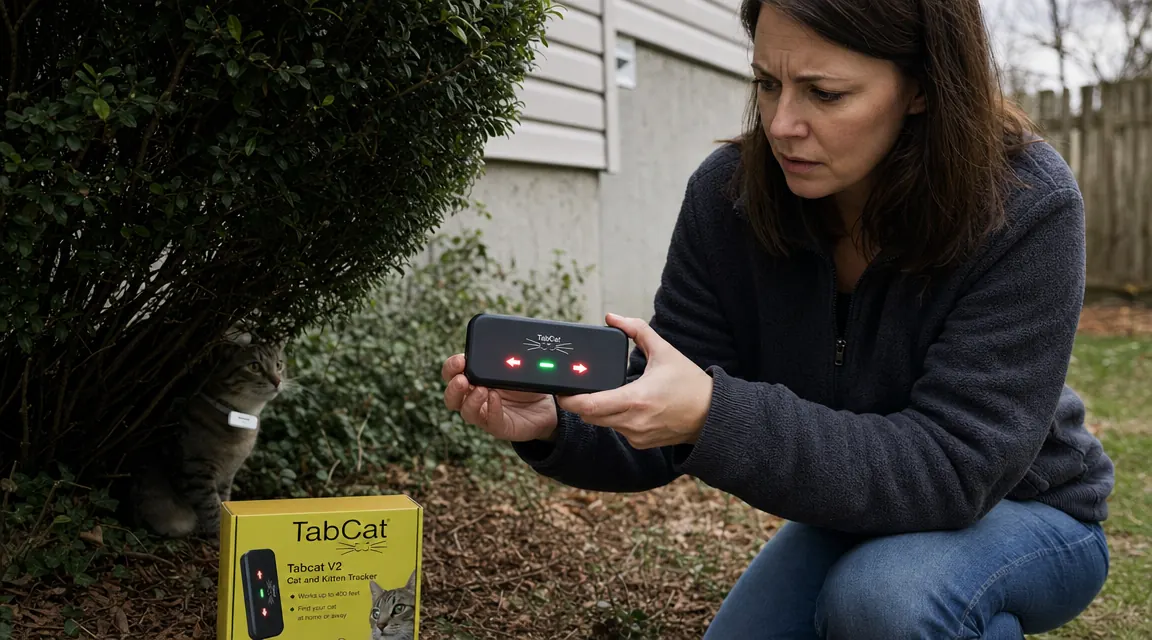
I had put the Tabcat V2 on June about three months earlier, mostly because a neighbor's indoor cat had gotten out and taken two days to find. I thought it was probably overkill for a cat who never moved faster than a slow trot toward her food bowl. Standing in the yard calling her name while my neighbors pretended not to watch, I was very glad I had been wrong about that.
The beep was faint and slow when I faced the fence. Then I turned toward the side of the garage and it picked up. Faster. Louder. I walked that direction.
The Tabcat is not a GPS tracker. There is no app, no map, no satellite connection, and no monthly subscription. What it has is a small handheld receiver, about the size of a TV remote, and two lightweight homing tags that weigh around six grams each. When you press the button on the receiver, it sends out a signal. The tag on the cat sends one back. The receiver beeps, and the beep gets faster and louder as you move toward the cat. Slower and quieter as you move away. That is the whole system. It is old technology, but it works exactly the way it is supposed to.
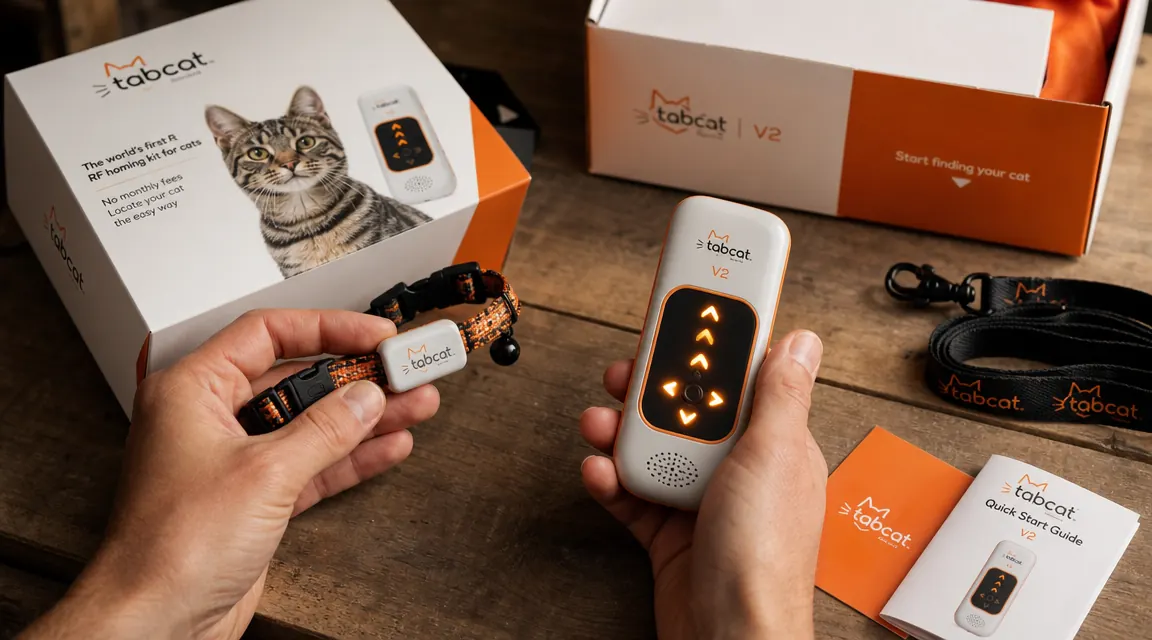
I grabbed the receiver from the kitchen counter and stepped into the yard. I pressed the locate button and swept it left and right the way the instructions had shown me. Slow beep facing the back fence. Slightly faster facing the driveway. Notably faster when I pointed it toward the side of the garage. I walked toward the garage. The beep sped up. I turned the corner, swept again. Faster still, pointing at the narrow gap between the garage wall and the overgrown junipers my neighbor has been meaning to trim for three years.
I crouched down and looked into that gap. June was pressed flat against the foundation, about four feet back, completely invisible from standing height. She was not hurt. She was just extremely interested in a cricket she had cornered and had no intention of acknowledging me until she was ready. I had to slide my arm in and scruff her out. She complained the whole way back to the house.
If your cat has ever disappeared for even five minutes, the Tabcat V2 is worth having before you need it.
No subscription, no app required. Two lightweight tags included. Works in houses, yards, and dense shrubs where GPS signals are useless anyway.
Amazon Check Today's Price on Amazon →The whole search took nine minutes from the moment I picked up the receiver. Without it, I would have been standing in the yard calling her name until dark. She was four feet behind a shrub in a gap I would not have checked until I had exhausted every other option.

A few things stood out to me after that afternoon. The tag on June's collar weighs so little that she has never once batted at it or tried to pull the collar off, and she is a cat who objects to anything new within thirty seconds of encountering it. The receiver is simple enough that I did not need to reread the manual when I actually needed it. The range in my neighborhood is somewhere between 150 and 200 feet depending on what is in the way, which is plenty for a suburban yard or a detached garage. You would not use Tabcat to find a cat who has wandered a mile, but that is not what it is built for. It is built for the more likely scenario: the cat who got out and is hiding nearby, terrified, and completely unwilling to come when called.
One honest limitation worth naming: the Tabcat does not tell you how far away the cat is, only what direction to move. If the area is full of obstacles, walls, or parked cars, the signal can bounce around a little and you may need to sweep a few times before you get a clear read. In my yard it was straightforward. In a more complex environment it might take a few extra sweeps. That said, any directional signal is a hundred times more useful than no signal at all.
What I Would Tell You If We Were Sitting at My Kitchen Table
If you have an indoor cat and you have told yourself they would never actually go outside, I understand the logic completely. I used it for six years. Indoor cats do slip out. They hide when they are scared. They do not come when you call them, especially when they are in a strange place and every sound feels like a threat. A GPS collar built for dogs is too heavy and too expensive for most cats, and it requires a cellular subscription on top of the hardware cost. The Tabcat is neither of those things. It is a one-time purchase, the tags are light enough for a kitten, and when you actually need it the directional beep is something your hands can follow even when your brain is running on adrenaline and not much else. I bought it because a neighbor's story scared me into it. Now I think every indoor cat owner should have one before the morning they realize the back door was not quite latched.
June wears hers every day now. She has forgiven me for the scruffing.
The Tabcat V2 comes with two homing tags, the handheld receiver, and no monthly bill. Check the current price on Amazon and see if it fits your setup.
Amazon Check Today's Price on Amazon →