

My cat June is an indoor cat, mostly. She has never once asked permission before slipping through a door I left open too long. She is nine years old, knows every inch of my house, and still manages to disappear under the deck or behind the neighbor's fence before I even realize she is gone. For a while, I assumed the answer was a GPS tracker, the kind you see advertised everywhere. Then I actually read the specs and realized that most GPS pet trackers are built for dogs, weigh more than a deck of cards, and require a cellular subscription that costs more per month than my Netflix. That is when I started looking at the Tabcat V2 Cat and Kitten Tracker from TabCat Homing Tags.
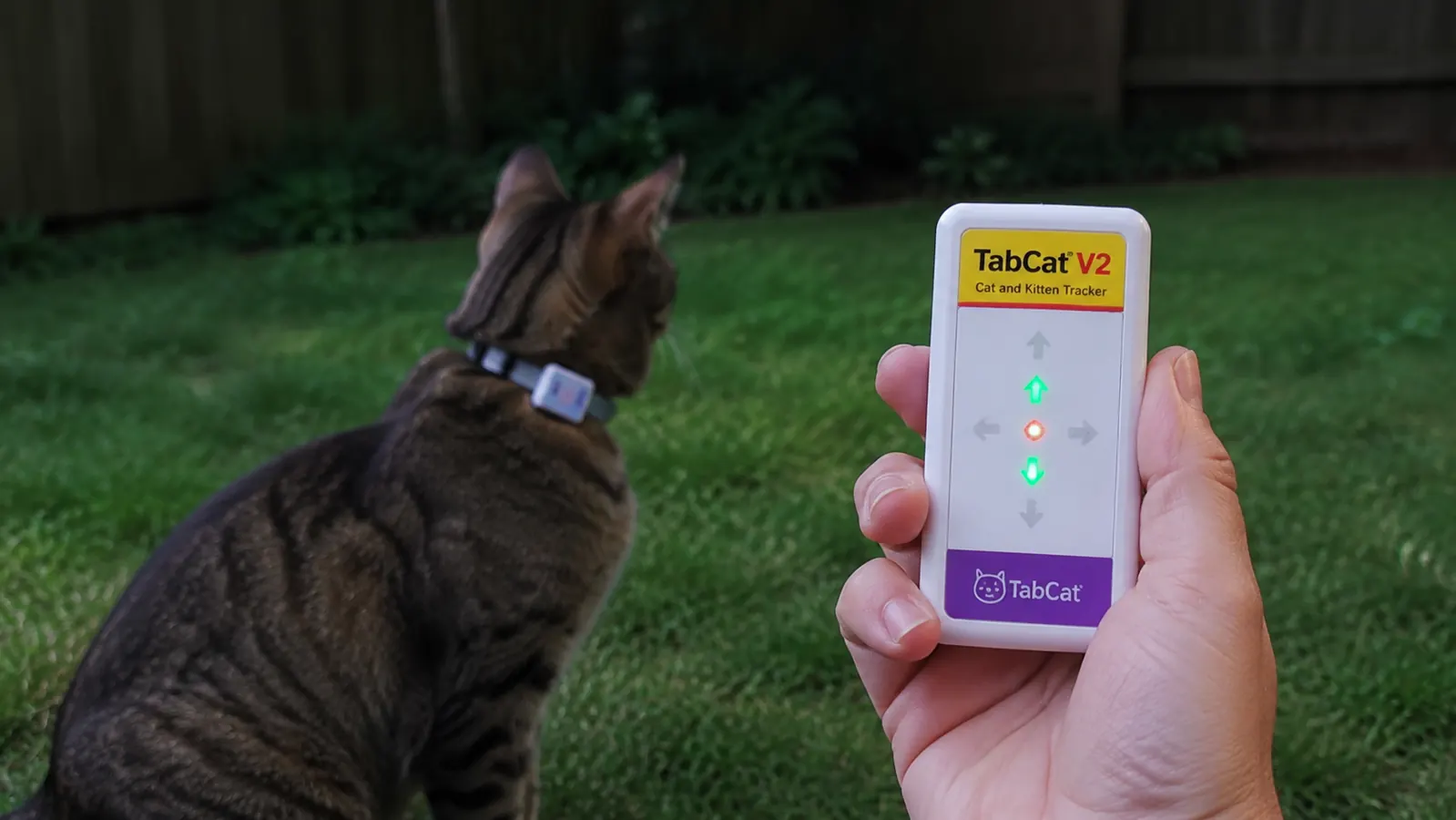
The Tabcat V2 does not use GPS, cellular, or Bluetooth. It uses radio-frequency homing, which means you carry a dedicated handheld receiver and physically walk toward your cat as the device beeps faster and the directional arrows point you in the right direction. That might sound old-fashioned compared to a live map on your phone, but after six months of using it on June and lending it to a friend for her kitten, I think RF homing is genuinely the right technology for most indoor cats that occasionally escape. Here is why, including where it falls short.
The Quick Verdict
The Tabcat V2 is the best cat-specific tracker on the market for indoor escape artists: featherweight tags, zero monthly fees, and a directional homing receiver that guides you straight to your cat. Not ideal if your cat roams miles from home.
Amazon Check Today's Price →Your cat is hiding somewhere close. The Tabcat V2 will tell you exactly which direction.
Two lightweight homing tags included. No subscription, no app, no cellular plan required. Works indoors and outdoors.
Amazon Check Today's Price on Amazon →How I Have Used It Over Six Months
June weighs about nine pounds and has a breakaway collar she tolerates reasonably well, which already put most GPS pet trackers out of the running. The Tractive Cat tracker, for example, weighs around 35 grams. The Tabcat V2 tag weighs just 6 grams. That is lighter than a standard collar bell. June did not even pause when I clipped it on.
Setup took about four minutes. You pair each tag to the handheld receiver by holding a button, and that is it. No Wi-Fi required, no account to create, no app to download. The receiver runs on two AA batteries. The tags run on a CR2032 coin cell that TabCat says lasts up to six months. My first tag lasted a little over five months before I saw the low-battery indicator, which is reasonable.
In practice, I have used the Tabcat to find June three times outdoors and twice inside the house. The outdoor finds were in a suburban backyard setting, within roughly 200 feet of my back door. All three times, the receiver locked on quickly and the directional arrows walked me right to her. The indoor finds were more impressive, honestly. Once she had wedged herself behind the water heater. The Tabcat still picked up the signal through two interior walls and guided me to the right corner of the utility room.
How the RF Homing System Actually Works
Radio-frequency homing is a technology that has been used in wildlife telemetry for decades. The Tabcat tag broadcasts a continuous RF signal. The handheld receiver picks up that signal and displays two things: directional arrows showing which way to walk, and an audio beep that increases in frequency as you get closer. When the beep becomes a solid tone, you are within a few feet of the tag.
This is fundamentally different from GPS, which uses satellites to report a coordinate, or Bluetooth, which relies on your phone and nearby network devices. RF homing requires no cellular network, no Wi-Fi, no satellite lock, and no smartphone. The tradeoff is that there is no map view and no ability to check your cat's location remotely from inside your house. You have to physically walk outside with the receiver in hand. For most lost-cat scenarios, that is fine. You already know your cat is somewhere within a few hundred feet. You just need to know which direction to walk.
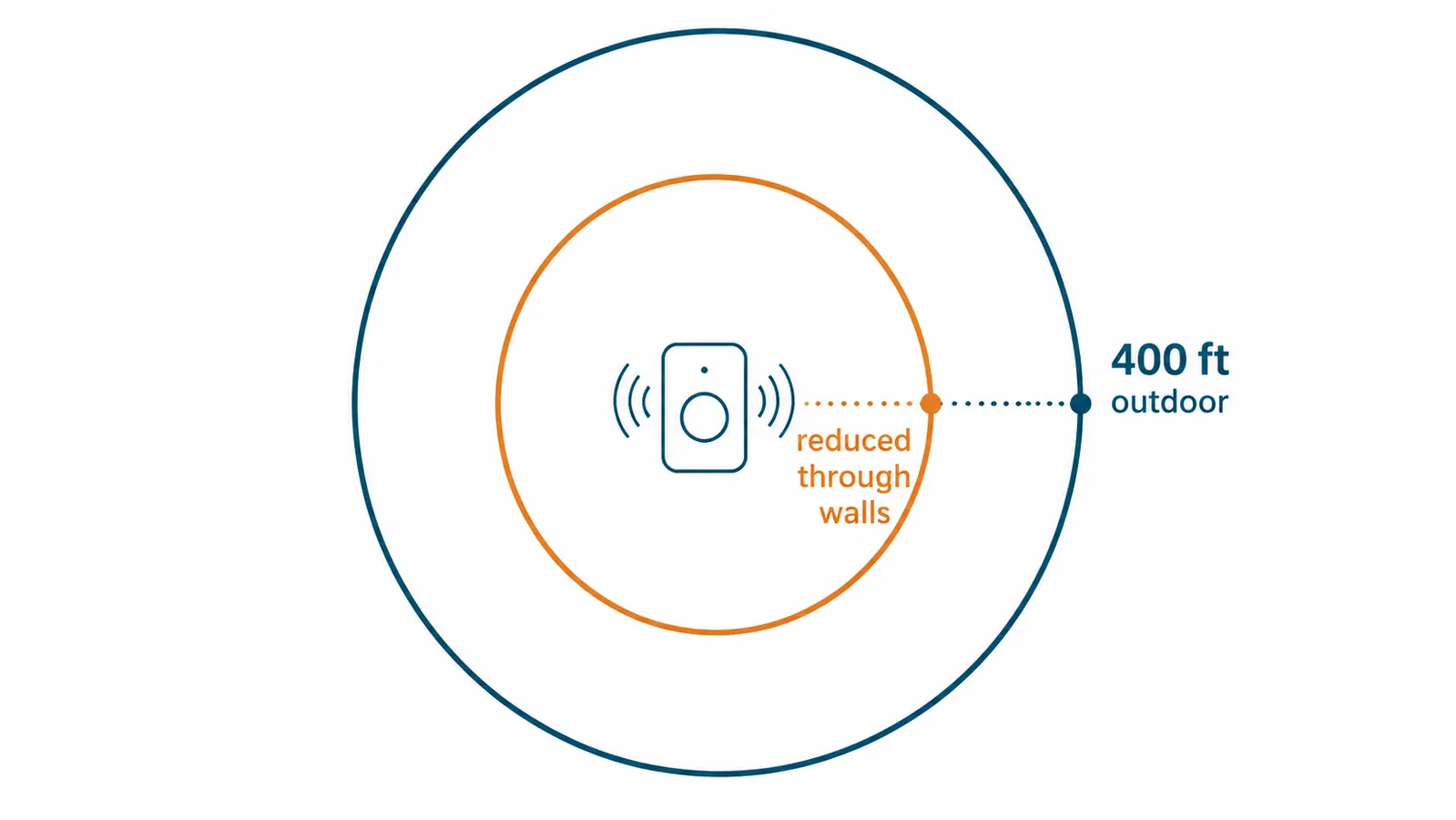
Outdoor range is listed as up to 400 feet in open conditions. In my suburban backyard with some fencing and shrubs, I consistently got reliable signal in the 150 to 250 foot range. Through walls indoors, range drops significantly, sometimes to 30 or 40 feet, but that is still enough to narrow down a room. For a cat hiding inside your home, that is all you need.
The beeping got faster as I walked toward the utility room, and when it hit that solid tone I was standing two feet from the water heater. June was wedged behind it, entirely unbothered. The Tabcat found her in under two minutes.
Tag Weight and Collar Fit for Cats and Kittens
This is where the Tabcat V2 genuinely stands apart from every GPS or cellular tracker on the market. The tags weigh 6 grams each. By comparison, the lightest cellular GPS cat trackers weigh 25 to 40 grams. The manufacturer recommends using the Tabcat on cats and kittens over 1 kg, which is roughly 2.2 pounds. That means it is appropriate for most kittens older than about 8 weeks, as well as very small adult cats that other trackers would simply be too heavy for.
The tag attaches to any standard cat collar with a small clip. It is about the size of a large coin. I have tried it on June and on my friend Sarah's eight-month-old kitten named Pepper, who weighs just over 5 pounds. Both cats adapted quickly and showed no signs of distress or irritation from the extra weight. That is not a guarantee your cat will feel the same, but the 6-gram weight gives you the best starting odds.
Battery Life and No-Subscription Operation
There is no monthly fee for the Tabcat V2. You pay once for the device and you own it. The tag batteries are standard CR2032 cells you can buy at any grocery store for under two dollars. TabCat rates them at up to six months of life per tag, and my experience tracks with that. The receiver uses AA batteries that I have replaced once in six months of occasional use.
The receiver has a low-battery indicator for each tag, which is a small but important feature. Nothing is worse than grabbing your tracker to find a lost cat only to discover the battery is dead. I check the indicator roughly once a month when I take the receiver off the hook by my door.
The Tabcat V2 comes with two tags in the box. That means you can track two cats with one receiver, which is useful for multi-cat households. You press a button on the receiver to switch between tag one and tag two. The receiver can also locate up to six tags total if you purchase additional tags separately.
Range Limitations and Where the Tabcat Struggles
The Tabcat is genuinely excellent for cats that stay within a few hundred feet of home, which describes most indoor cats that occasionally escape. But if your cat is an outdoor-outdoor cat who regularly wanders several blocks or more, the Tabcat's 400-foot outdoor range will not be enough to find them. You might walk to the edge of your property and lose the signal entirely.
In that situation, you would need something with longer range or a map-based tracking system. A cellular GPS tracker like Tractive, despite being heavier, would let you see a location on a map from your couch before you ever leave the house. The RF homing approach requires you to be physically close before the search can begin. That is the core limitation.
Dense urban environments with lots of competing RF signals can also reduce performance. I have not personally tested in a dense apartment building, but users in building complexes report getting signal through a few floors but losing it across large multi-story structures. For suburban or rural settings, this is not a concern.

What the Tabcat V2 Looks Like vs Alternatives
If you are deciding between the Tabcat and a cellular GPS tracker marketed for cats, the weight difference is the first thing to consider. Cellular GPS trackers require a monthly subscription, usually between 8 and 15 dollars per month. Over two years, that adds up to more than the hardware cost. The Tabcat has no ongoing cost after purchase.
If you are deciding between Tabcat and an Apple AirTag, the comparison is different. AirTag relies on the Find My network, meaning it can only update a location when another Apple device passes nearby and anonymously pings the tag. In a suburban neighborhood with decent iPhone density, an AirTag can eventually surface your cat's location, but there is no guarantee of timing. The Tabcat, by contrast, works actively: you point it and walk. For immediate active searching, the Tabcat is faster.
For a full side-by-side breakdown of how the Tabcat compares to Tractive's cat-specific GPS option, see our detailed comparison at Tabcat vs Tractive Cat GPS. And if you want a quick summary of the top reasons cat owners choose the Tabcat over GPS subscriptions, check out 10 Reasons Tabcat Is the Best Cat Tracker for Indoor and Outdoor Cats.
What I Liked
- Tags weigh just 6 grams, suitable for kittens and small cats
- No monthly subscription or smartphone required
- Works indoors through walls, excellent for hiding-spot searches
- Two tags included, supports up to six tags total
- Directional homing is faster than passive Bluetooth network-find
- Standard CR2032 and AA batteries, easy to replace anywhere
- Rated for outdoor use, splash-resistant design
Where It Falls Short
- No map view or remote location check from your phone
- 400-foot outdoor range means you must already be nearby
- Does not work if your cat roams multiple blocks from home
- Requires carrying a dedicated handheld receiver
- Indoor range through dense materials can drop to 30-40 feet
- No activity tracking or health monitoring features
Who This Is For
The Tabcat V2 is the right tracker for indoor cats that occasionally escape. If your cat's world is your home and your yard, and the fear is not "she wandered three miles away" but rather "she is hiding somewhere on this property and I cannot find her," the Tabcat is purpose-built for you. It is also ideal for multi-cat households where weight-appropriate, fee-free tracking matters, and for kitten owners who cannot put a 35-gram GPS unit on a 5-pound animal. If you have been avoiding cat trackers because every option required a monthly subscription, the Tabcat removes that barrier entirely.
Who Should Skip It
If your cat regularly ventures more than a few hundred feet from your door, or if you want to check your cat's location passively from inside your house without going outside to search, the Tabcat will frustrate you. It is an active search tool, not a passive monitoring system. Cats that roam freely across a large territory need something with live GPS mapping. In that case, a cellular GPS tracker designed specifically for cats, despite the monthly cost, will serve you better. Similarly, if you want activity tracking or health monitoring alongside location awareness, the Tabcat does not offer either of those features.
Six grams on her collar. Zero dollars a month. One receiver that walks you straight to her.
The Tabcat V2 includes two lightweight homing tags and the handheld receiver. No app, no subscription, no cellular plan. Works for cats as small as 2.2 lbs.
Amazon Check Today's Price on Amazon →