
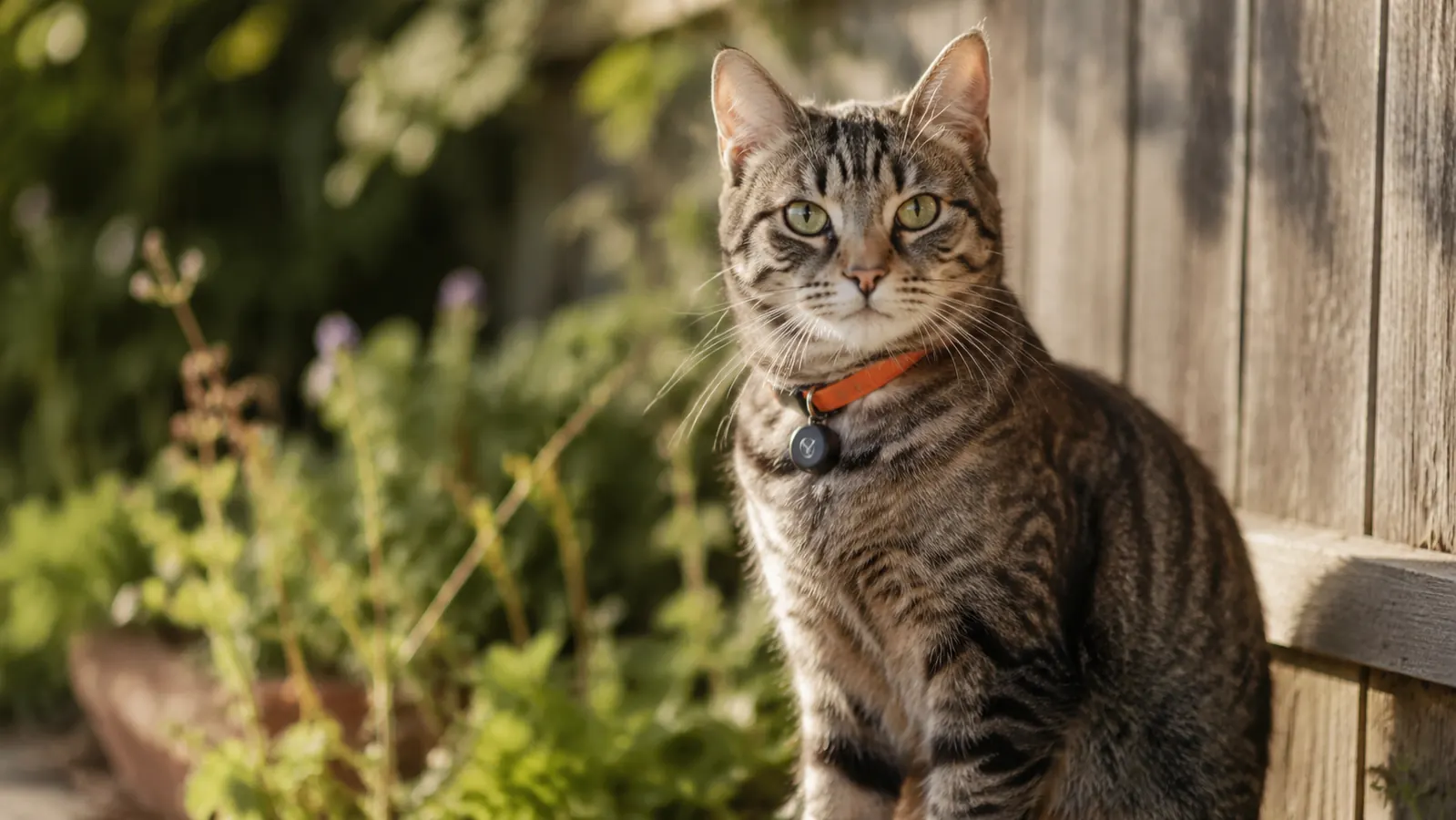
My tabby June has exactly one bad habit. She is a 5-year-old indoor cat who figured out how to shoulder-check the back screen door open when she was about 18 months old, and she has used that skill approximately whenever the mood strikes her ever since. She has never gone further than the neighbor's yard. But the gap between 'never gone far' and 'never could go far' kept me up at night, which is how I ended up spending three months with the Tabcat V2 on her collar and a lot of honest opinions about it.
If you are here, you are probably weighing this against a GPS subscription tracker and wondering whether the no-monthly-fee pitch is too good to be true, or maybe you already know GPS collars are too heavy for most cats and you want to know if Tabcat is the real solution. I will give you the honest version, including the things that took me by surprise and the situations where this tracker genuinely did not perform the way I expected.
The Quick Verdict
The Tabcat V2 is the most practical tracker for indoor cats with occasional escape risk, but the 400-foot real-world range and physical-walking-required recovery method are genuine constraints you need to accept before buying.
Amazon Check Today's Price →Your cat's next escape attempt won't wait for you to finish reading.
The Tabcat V2 includes two lightweight homing tags and the handheld receiver. No subscription, no app, no monthly bill. Check the current price on Amazon before deciding.
Amazon Check Today's Price on Amazon →What the Tabcat V2 Actually Is (And Is Not)
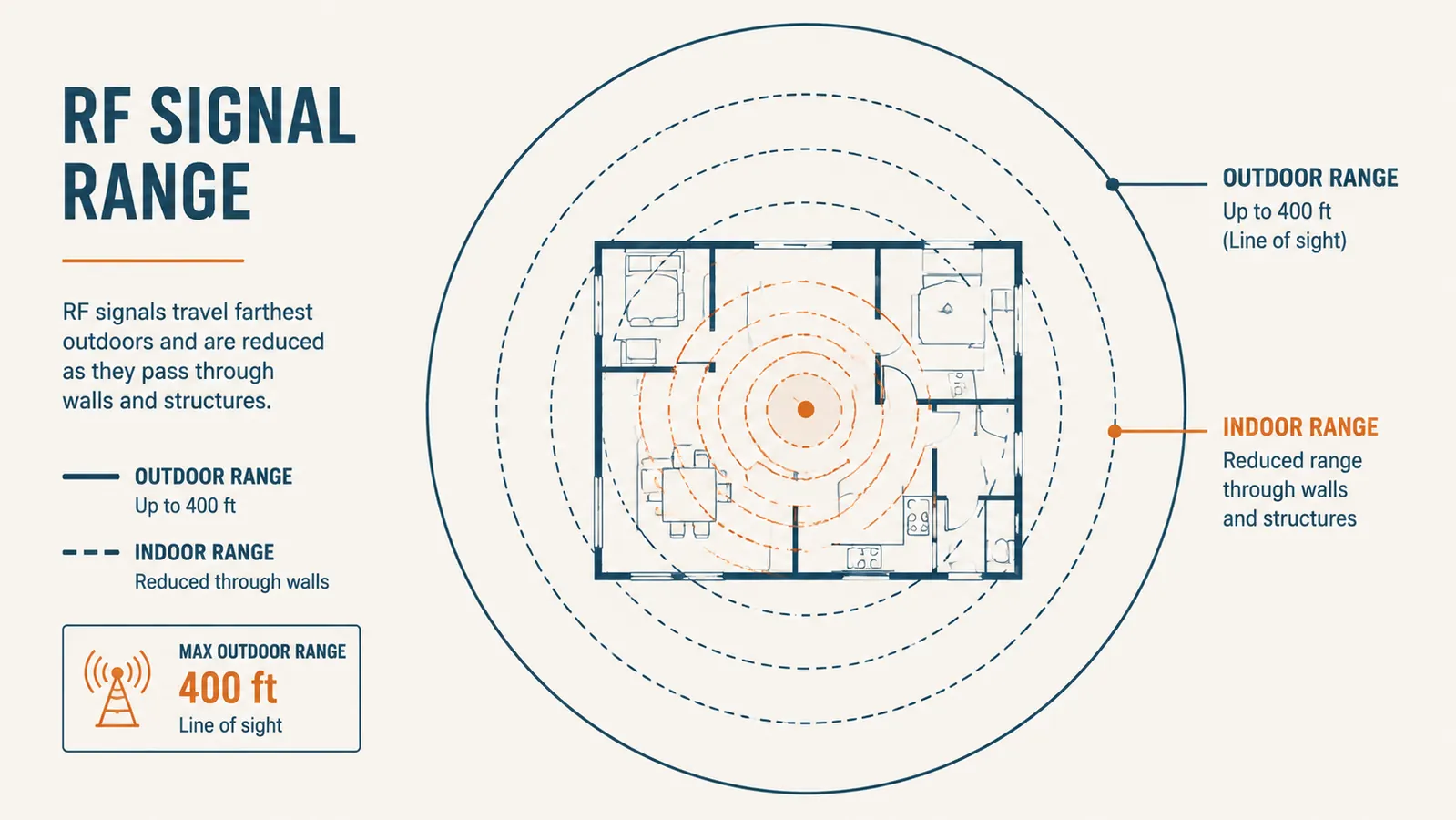
This is the part most reviews gloss over, and it is the most important thing to understand before you buy. The Tabcat V2 is NOT a GPS tracker. There is no satellite connection, no cellular data, no app, no map, and no remote location check. It uses radio-frequency homing technology, which means the handheld receiver emits a signal and the tag on your cat's collar responds. The receiver then tells you, via a series of beeps that get faster and louder, which direction your cat is and roughly how close you are.
The practical implication: you have to physically walk toward your cat. You cannot sit on your couch and watch a dot move on a screen. You go outside with the receiver, hold it up, rotate slowly until the beep gets faster, and walk that direction. Then you repeat until you find her. If that process sounds manageable to you, read on. If you wanted a map on your phone with a moving dot, the Tabcat is not that, and no amount of goodwill toward it will make it that.
How I've Used It: Three Months of Real Testing
I set up both tags that came in the box. One went on June's collar. The second went on my other cat, a 9-year-old orange tabby named Miso who barely leaves the couch and has never escaped once. I use Miso's tag as a calibration tool. When I practice with the receiver, I put him somewhere in the house and run a timed find. It has been useful for understanding how the signal behaves inside the house versus outside.
Over three months, June used her shoulder-check trick four times. On two of those occasions I found her before she even got to the fence, using nothing more than a direct visual search. On the third occasion, I actually used the Tabcat. She had gotten into the neighbor's overgrown backyard and was not responding to my voice. The receiver found her direction in about 20 seconds, and I had her in my arms within four minutes. On the fourth occasion, I could not find the receiver because it was buried under a pile of mail on the kitchen counter and its battery was dead. That was a human error, not a Tabcat failure, but it is the kind of human error this system is vulnerable to.
The Range Reality: 400 Feet Outdoors, Much Less Inside
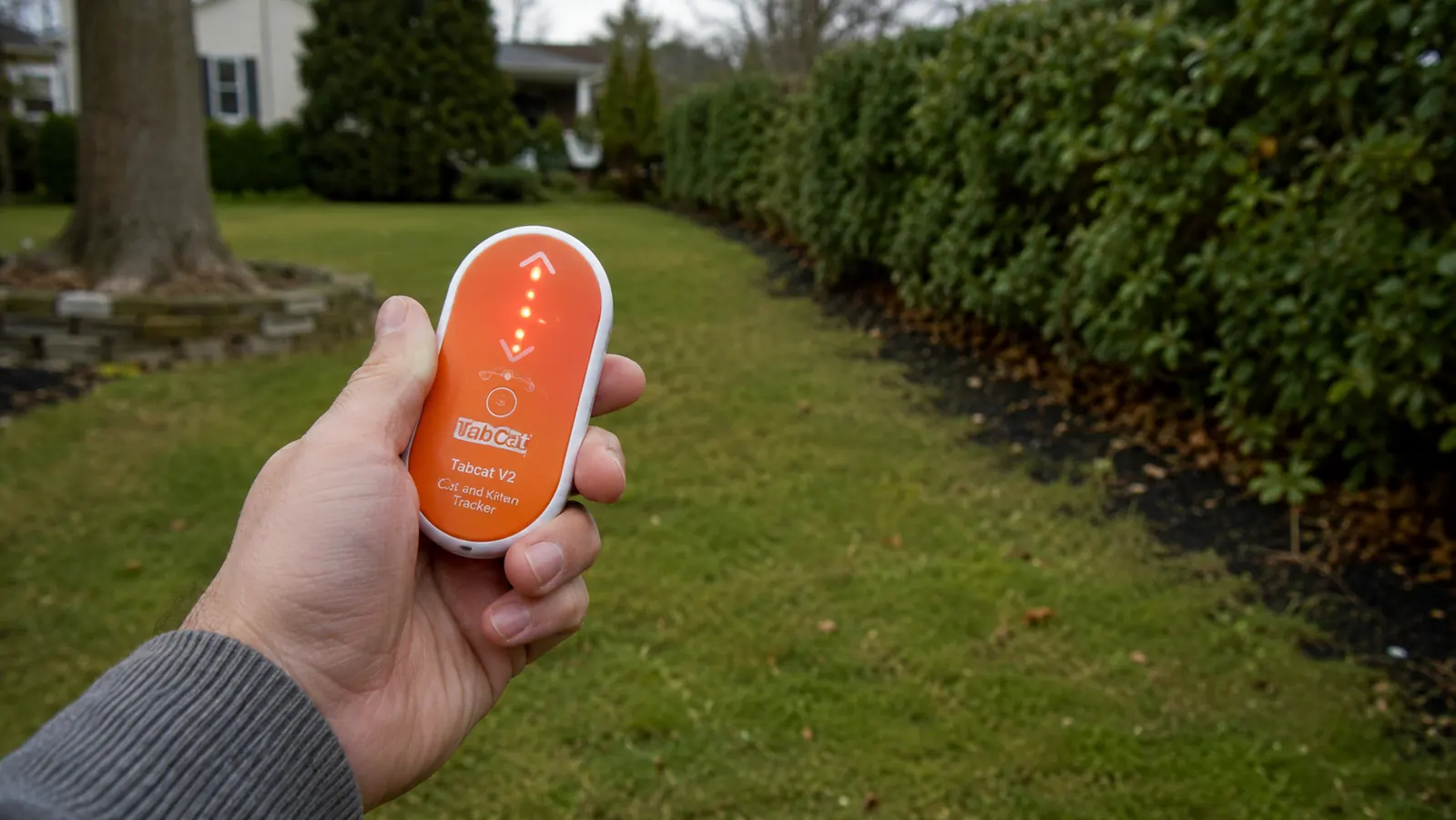
Tabcat advertises a range of up to 400 feet. In my testing on an open suburban street with no obstacles, that number is roughly correct. I put June's tag at the far end of my block and the receiver picked her up clearly at around 380 feet on a clear morning. That felt genuinely impressive for a device this size.
Inside the house is a different story. Walls, floors, appliances, and furniture absorb and scatter the radio signal. When I hid Miso's tag in the back bedroom with two interior walls between us, the range dropped to something closer to 60 or 70 feet before I got a reliable directional signal. Through a concrete foundation or under a deck, it was worse. The Tabcat will absolutely help you find a cat hiding in a cabinet or behind the dryer, but do not expect GPS-level penetration through solid structure. You may need to get close before the signal becomes useful indoors.
For cats that escape into open neighborhoods, the 400-foot outdoor range is meaningful. For a cat that exclusively hides inside your own house, expect to get within a room or two before the direction becomes clearly actionable. That is still faster than tearing your house apart by memory.
The Learning Curve on the Directional Beep
The receiver tells you direction via beep frequency and volume. Faster, louder beeps mean you are facing the right direction and getting closer. Slower, quieter beeps mean turn around. This works, but it takes practice to trust. The first few times I used it I kept second-guessing myself, rotating past the peak signal because I was not sure if I had actually hit the loudest point or just imagined it. After a few indoor practice runs with Miso, I got comfortable reading the signal without overthinking it.
The instruction manual does a decent job explaining the technique, but there is no substitute for just practicing it before your cat actually goes missing. I would strongly recommend doing at least three practice runs inside your house before you need this in a real emergency. Hide a tag somewhere annoying. Try to find it. You will learn more in 15 minutes of practice than in an hour of reading the manual.
Practice the beep system before you need it. In a real emergency, a receiver you have never used correctly is not a receiver at all.
The Honest Tradeoffs Nobody Tells You About
The receiver needs to be charged and not lost. This sounds obvious until you have lived with the product for a month. The receiver is a small oval device, roughly the size of a thick TV remote, and it lives somewhere in your house when it is not in use. In my house it lived on the kitchen counter for the first six weeks and then migrated to the junk drawer and then to a basket by the door. If you do not give it a permanent home and a charging routine, you will find it with a dead battery at the exact moment you need it. Tabcat says the receiver battery lasts a month on standby. In my testing, with occasional practice use, I got closer to three weeks. A monthly charge reminder on your phone is not a bad idea.
The tags need battery replacements. Each tag uses a CR2016 coin cell battery. Tabcat estimates one year of life per battery, and mine have tracked close to that so far. Replacement batteries cost about a dollar each online. This is genuinely not a burden, but it is worth noting that 'no monthly fee' does not mean 'no ongoing costs.' The batteries are not rechargeable. You check the battery level with a button press on the receiver, which shows a simple low-battery indicator for each registered tag. Budget a few minutes per year per tag to keep them fresh.
Replacement tags cost around $30 to $35 each. The kit comes with two, which covers most households. If you have more than two cats, or lose a tag (cats do what cats do), additional tags are available but not cheap. This is one real cost comparison point against GPS tracker subscriptions: the Tabcat's upfront cost is fixed and the annual cost is minimal, but if you need more than two tags you will pay for them individually.
You have to physically go find your cat. I keep coming back to this because it is the most fundamental distinction from a GPS collar, and it is something a buyer coming from the app-centric world of AirTag and Tractive will find jarring. With Tractive, you open an app from your bed and see exactly where your cat is. With Tabcat, you put on shoes. On a cold night, in the rain, at 11pm when your cat has been gone for two hours, that distinction matters. It is not a reason not to buy the Tabcat. It is a reason to be clear-eyed about what you are buying.
Tag Weight and Collar Comfort on Cats
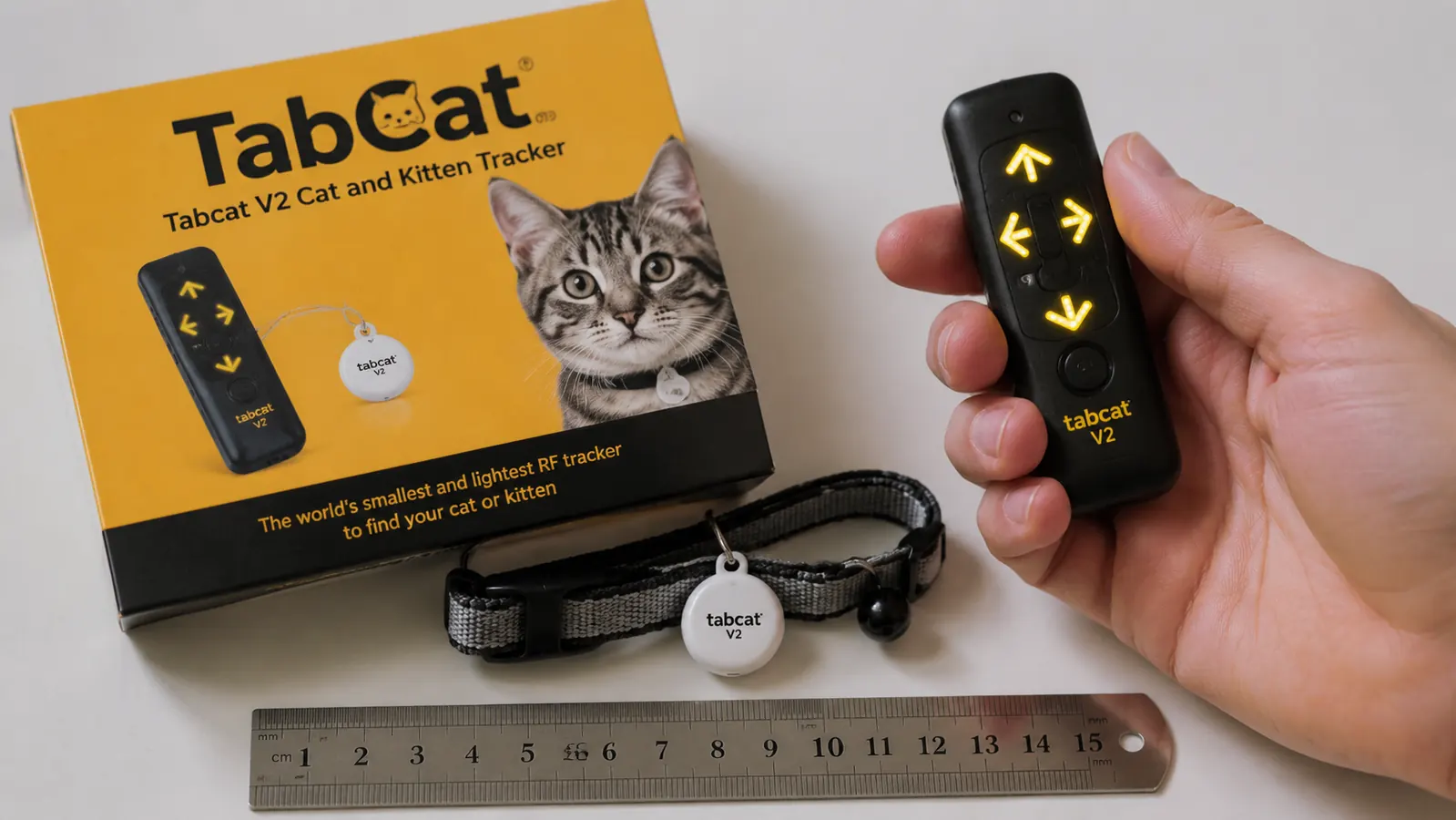
This is where Tabcat genuinely shines compared to GPS collars. Each homing tag weighs about 6 grams. For reference, most cellular GPS cat collars weigh between 35 and 60 grams, which is simply too heavy for most cats and violates every veterinary recommendation about collar weight relative to body mass. June is a 9-pound cat. A 6-gram tag on a lightweight breakaway collar barely registers. She has not noticed it, has not scratched at it, and has not tried to pull it off. That is not a universal experience across all cats, but it is common feedback from Tabcat users and it tracks with the physics of the thing.
Tabcat includes two sets of attachment straps in different widths. The narrower strap fits slim cat collars. Make sure you are using a quick-release or breakaway collar. This is non-negotiable for a cat that goes outside. If your cat gets snagged on a branch, a non-breakaway collar can be lethal. The Tabcat tag stays with the collar, so if the collar releases in an escape, you will be tracking the collar, not the cat. That is a limitation worth acknowledging, but it is the same limitation every collar-based tracker has.
Tabcat V2 vs GPS Subscription Trackers: An Honest Comparison
The Tractive GPS cat tracker is the most commonly compared alternative. Here is the honest breakdown. Tractive gives you a live map, location history, 24/7 monitoring, and an app you can check from anywhere. It costs around $50 for the device plus roughly $5 to $8 per month for the subscription, or about $60 to $100 per year ongoing. For an outdoor cat who roams or a cat you genuinely cannot keep inside, that subscription buys you something the Tabcat cannot: the ability to find your cat while you are at work, or from across town, or in real time without physically going outside.
The Tabcat V2 costs around $100 once, includes two tags, requires no subscription, and will work for years on minimal battery costs. For an indoor cat with occasional escape risk, a cat who does not roam far, a multi-cat household where you need two tags, or any owner who refuses to pay a monthly subscription on principle, the Tabcat is a sensible and honest choice. It just requires accepting its constraints. These are different tools for different situations, not one clear winner.
One thing I want to be direct about: if your cat regularly goes more than a few blocks away, the Tabcat's 400-foot range may not be enough. If your cat is consistently missing for hours, you may need a cellular tracker's ability to show location when you cannot even start searching. The Tabcat is a proximity-finding tool. Once your cat is more than a quarter mile away and you do not know the general direction, starting a search is slower than opening an app. Know what situation you are actually in.
What I Liked
- No monthly subscription, ever. The ongoing cost is coin cell batteries, roughly a dollar per tag per year.
- Extraordinarily light tags at 6 grams each. The only cat-appropriate weight for tracking technology.
- Two tags included in the base kit. Most GPS trackers charge per device.
- Outdoor range up to 400 feet is genuinely useful for suburban cats.
- Works without a smartphone, app, or cellular signal. No dead zones.
- Indoor find capability is real. Finding a hidden cat inside your own house is a legitimate and common use case.
- Simple to learn once you practice the directional beep a few times.
Where It Falls Short
- You must physically walk toward your cat. No app, no map, no remote location check.
- Indoor range through walls drops significantly, sometimes to 60 to 70 feet.
- The receiver needs to be kept charged and in a known location. This requires a household discipline the product cannot enforce.
- Replacement tags are not cheap at $30 to $35 each if you need more than two.
- Tags use non-rechargeable coin cell batteries that need annual replacement.
- Not useful if your cat is more than a quarter mile away and you do not know the general direction.
- The receiver is one more device that can get lost or die at an inconvenient time.

Who This Is For
The Tabcat V2 is a near-perfect match for indoor cats with occasional or accidental escape risk, the cat who shoulders the screen door open, the cat who darts through your legs when you bring in groceries, the cat who has never gone more than two yards over but one day might. It is also excellent for multi-cat households where tagging two animals for one upfront cost matters. Owners who refuse subscription services on principle will find it the most credible cat-specific no-fee option on the market. And anyone whose cat hides inside the house when stressed, sick, or post-veterinary visit will find the indoor homing genuinely useful even before any escape is involved.
Who Should Skip It
If your cat regularly roams more than a few blocks or is gone for hours at a time, you need a GPS subscription tracker and you should make peace with that cost. If you travel frequently and want to check your cat's location while away from home, the Tabcat cannot do that. If you live in a rural area where a missing cat could realistically be half a mile into the woods, the 400-foot range is not enough to start a useful search. And if you know yourself well enough to know that you will not keep the receiver charged and in a fixed spot, be honest about that before spending $100 on a device you will not be able to use in an emergency.
Two cats, one kit, zero monthly bills. See if the Tabcat V2 fits your situation.
The Tabcat V2 ships with two homing tags and the handheld receiver. If you have one or two indoor cats with occasional escape risk, this is the most cat-appropriate tracker on the market. Check today's price on Amazon.
Amazon Check Today's Price on Amazon →