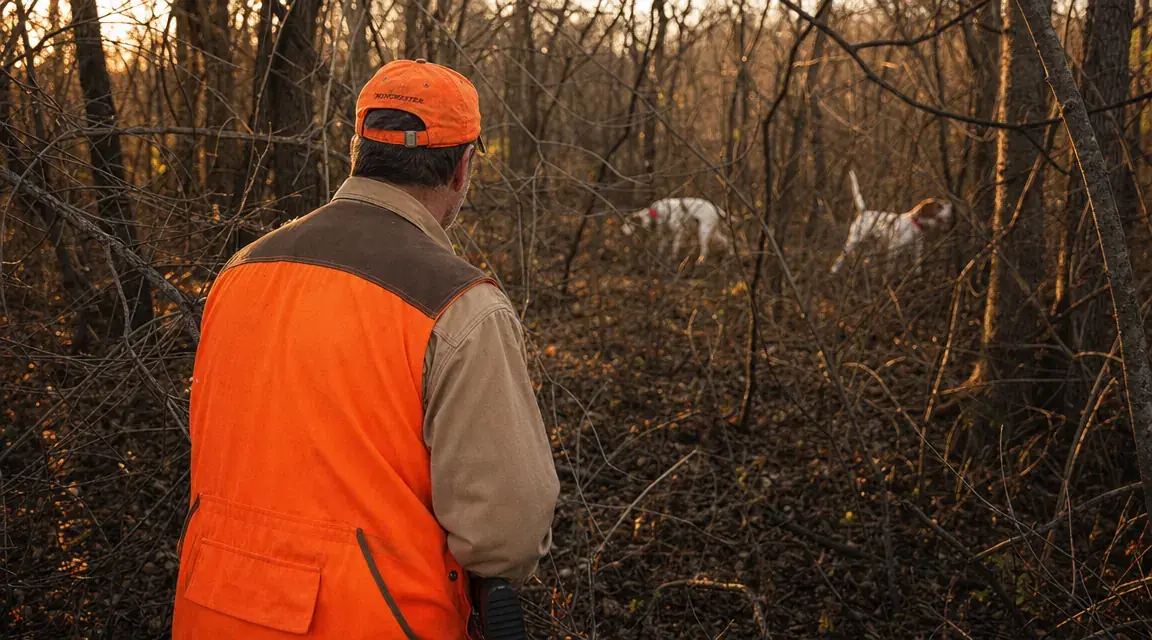
My Brittany spaniel, Colt, had a good nose and a terrible habit of running. Pheasant season, first morning out, he locked on a rooster that crossed a CRP field edge and kept going into the pine breaks beyond. No cell signal out there. The Tractive collar on his neck went gray on my phone within about 200 yards of the tree line. I found him by driving the gravel roads and listening. That was the last season I ran a cellular tracker.
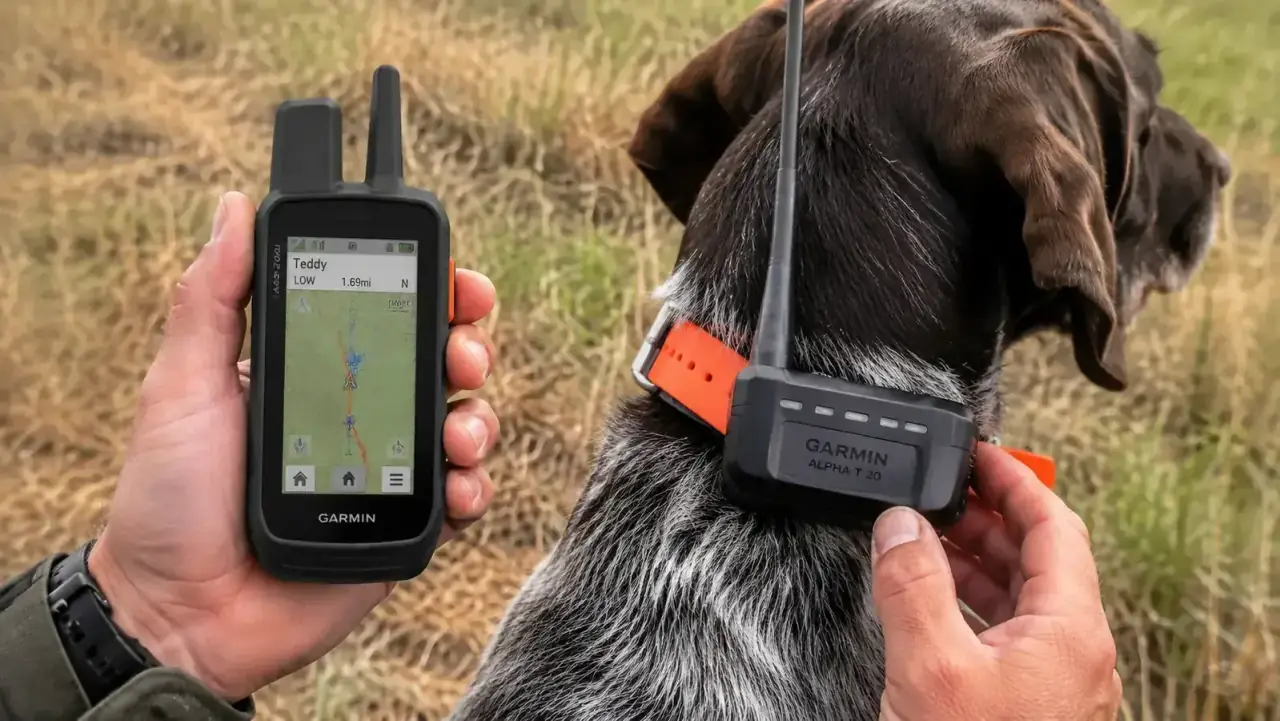
If your dog hunts, flushes, or trees game in real cover, you already know how fast cellular signal disappears. Dedicated hunting dog GPS systems like the Garmin Alpha T 20 work on direct radio frequency between the collar and a handheld unit, not on cell towers. That is a fundamentally different technology, and the difference matters the moment your dog crosses into terrain where carriers have no infrastructure. Here are ten reasons experienced hunting and sporting dog owners make that switch, and why they rarely go back.
Your dog is in the cover. Your phone has no bars. This is the tool that still works.
The Garmin Alpha T 20 GPS collar pairs directly with the Garmin Alpha handheld. Up to 9-mile range, no cell signal required, no monthly fee. Rated 4.6 stars by hunting dog owners who use it in the field.
Amazon Check Today's Price on Amazon →Cellular trackers go silent the moment you leave coverage
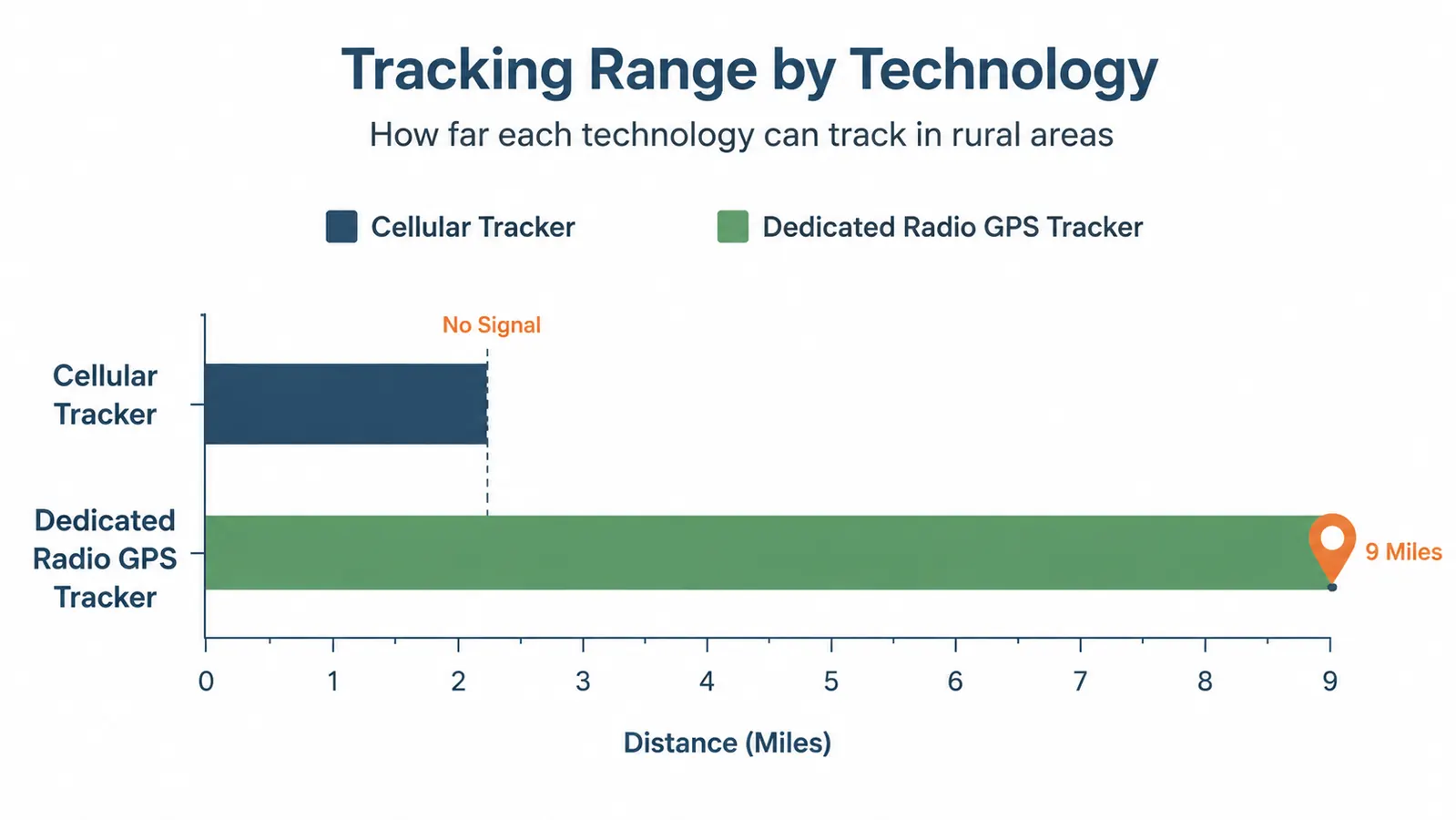
Consumer GPS trackers like Tractive or Fi depend entirely on the nearest cell tower. Rural hunting land, national forests, wildlife management areas, and most river bottoms have no coverage at all. The Garmin Alpha T 20 transmits on direct radio frequency between the T 20 collar and the Alpha handheld unit. No tower needed, no dead zones, no gray dot on your phone screen when your dog is 600 yards into the timber.
Up to 9 miles of long-range tracking in open terrain
Nine miles is the rated line-of-sight range of the Garmin Alpha T 20 system in open country. Dense hardwood or heavy topography will reduce that, but even in broken terrain you typically maintain several miles of reliable contact. A cellular tracker gives you zero miles once the network drops. Long-range radio coverage is not a marketing number, it is the practical difference between finding your dog in the field and driving gravel roads hoping to stumble on him.
Track multiple dogs at the same time from one handheld
Running a brace of dogs, or hunting with a partner who has a second dog? The Garmin Alpha system is designed to track multiple collars simultaneously on a single handheld unit. You see every dog's position, heading, and status at once. Consumer cellular trackers are single-dog units that require switching between apps or accounts. If you hunt with more than one dog, multiple-dog tracking is not a luxury, it is how you keep your pack together in heavy cover.
A dedicated handheld with screen beats a phone in the field
Phones are great at home. In the field, you are wearing gloves, your screen fogs, your battery drains in the cold, and app notifications fight for attention. The Garmin Alpha handheld is a purpose-built GPS device with a daylight-readable screen, physical buttons, and a mapped display that shows terrain, dog position, and direction arrow simultaneously. No unlocking, no squinting, no dead phone when your dog is on point 800 yards west of you.
No monthly subscription fee eating at your hunting budget
Cellular pet trackers charge a monthly or annual fee for the data plan that powers their network connection. The Garmin Alpha T 20 has no subscription requirement. You buy the collar and the Alpha handheld once, and the radio link between them is yours to use without recurring costs. Over two or three hunting seasons, the math favors the dedicated system by a meaningful margin, especially for anyone running multiple dogs who would need multiple cellular subscriptions.
The cell tracker worked perfectly until we hit the first ridge. Garmin worked all day, every day, for three seasons. That is the entire story.
Rugged construction built for thick cover and rough weather
Hunting dogs work in conditions that destroy consumer electronics. Heavy briars, creek crossings, rain, mud, and cold temperatures are a normal Tuesday in November. The Garmin T 20 collar is built to those standards, with a water rating designed for field use, not just a light sprinkle. Consumer-grade trackers are typically rated for incidental rain. A dog hammering through a creek bottom or crashing through cattails is not incidental rain.
Real-time position updates without cellular latency
Cellular trackers update location by routing data through the carrier network and back to a server before it reaches your phone. That round trip takes time, sometimes 30 to 60 seconds or more depending on signal conditions. The Garmin Alpha T 20 communicates directly from collar to handheld by radio, with fast position updates that reflect where your dog actually is right now, not where he was a minute ago. When a dog is covering ground at speed, a 60-second lag is the difference between a good retrieve and a long search.
Optional e-collar training built into the same system
The Garmin Alpha ecosystem supports e-collar integration alongside the GPS collar. That means tone, vibration, and stimulation are all managed from the same Alpha handheld that shows you your dog's position. You are not juggling a separate remote. For bird dog trainers and handlers who already use e-collar conditioning, having it consolidated into one device with a mapped screen is a practical improvement over carrying two separate remotes through a day of hunting.

Designed specifically for upland, waterfowl, and hound hunting
Consumer pet trackers are designed for the dog that slips through a fence in the suburbs. Garmin's hunting dog GPS lineup is designed for upland bird hunters following a hard-running pointer, waterfowl hunters in thick marsh grass, and hound hunters running dogs in mountain terrain for hours at a time. The software shows heading and speed alongside position, so you can tell if your dog is tracking something, standing on point, or looping back toward you. That level of hunting-specific data does not exist in consumer pet trackers.
Works where maps go blank and towers do not exist
Some of the best bird hunting and hound country in North America has zero cell coverage. National forests, state game lands, BLM ground, and private ranch land far from any highway are exactly the places where hunting dogs run hardest and go farthest. The Garmin Alpha T 20 does not care about any of that. Its radio link works in those places the same way it works everywhere else, because it is not dependent on any external infrastructure. That reliability is the single most important feature for anyone hunting serious off-grid country.
What I Would Skip
If your dog never leaves your backyard or a suburban dog park, the Garmin Alpha T 20 is probably more than you need. It requires the Alpha handheld unit to function, which adds to the total system cost. Cellular trackers that connect to your phone are simpler to set up and genuinely fine for dogs that stay in areas with reliable coverage. The Alpha system earns its cost in the field, not in the neighborhood. If your dog hunts, flushes birds, or runs terrain where you lose cell signal, the dedicated system is the right tool. If your dog does not, a simpler cellular tracker may serve you well. We cover both options in depth across this site.
Cellular trackers are a fine product. They just cannot do what a dedicated hunting dog GPS does in real cover, and that gap matters when your dog is two ridges over in the national forest.
If your dog hunts off-grid, this is the collar worth running.
The Garmin Alpha T 20 GPS collar is the standard in hunting dog tracking for a reason. Long-range direct radio, no cellular dependency, no monthly fee, rugged enough for a full season in the field. For a deeper look at field performance, see our full field-test review.
Amazon Check Today's Price on Amazon →