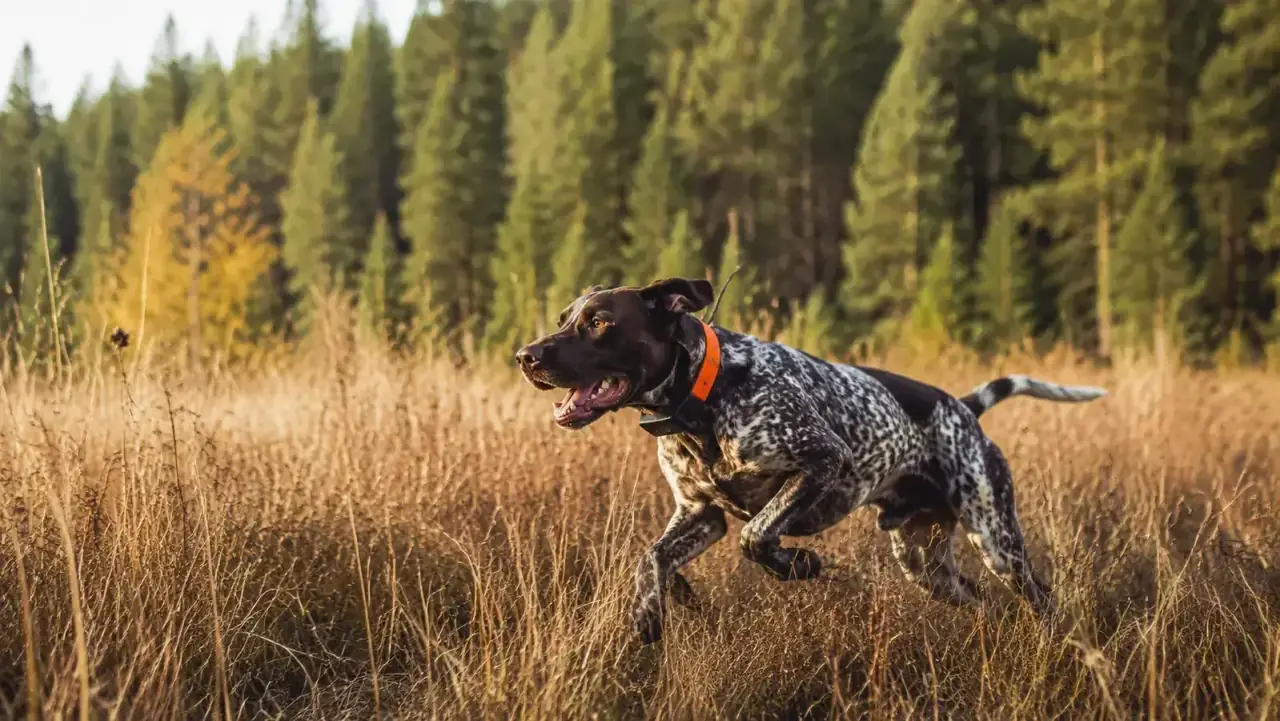
You are 400 yards into national forest, the cover is thick, and your setter just pushed a bird hard to the left. You pull out your phone to check the Tractive app. No signal. The spinning wheel is the only thing moving. Your dog is somewhere in those pines and you have no idea where.
That is not a hypothetical. It happens every season to hunters who pick a cellular tracker because it looked good in a YouTube review shot in someone's backyard. Tractive is a genuinely good tracker for what it is designed to do: keep tabs on a dog in areas with cell coverage. The Garmin Alpha T 20 is built for something different. It uses direct radio communication between the collar and a dedicated handheld unit. No towers. No subscription. No cell signal required. For hunters and sporting dog owners working remote terrain, that difference is everything.
| attribute | left | right |
| attribute | left | right |
| attribute | left | right |
| attribute | left | right |
| attribute | left | right |
| attribute | left | right |
| attribute | left | right |
| attribute | left | right |
| attribute | left | right |
| attribute | left | right |
If your dog hunts off-grid, Tractive stops working where you need it most.
The Garmin Alpha T 20 uses direct radio to the handheld unit, so tracking works whether you are deep in a national forest, on a mountain ridge, or in a swamp bottom with zero bars. No subscription, no towers, no app required.
Amazon Check Today's Price on Amazon →The Core Difference: Radio vs Cell Towers
Tractive, and nearly every other consumer pet tracker on the market, puts a tiny cellular modem inside the collar. The collar talks to a cell tower, the tower routes data to Tractive's servers, and Tractive's servers push a location update to your phone app. It is a clever system that works well in populated areas. The problem is that it has three points of failure for remote hunting: the collar needs cell coverage, the servers need to be online, and your phone needs a data connection too. Remove any one of those three and the location history stops updating.
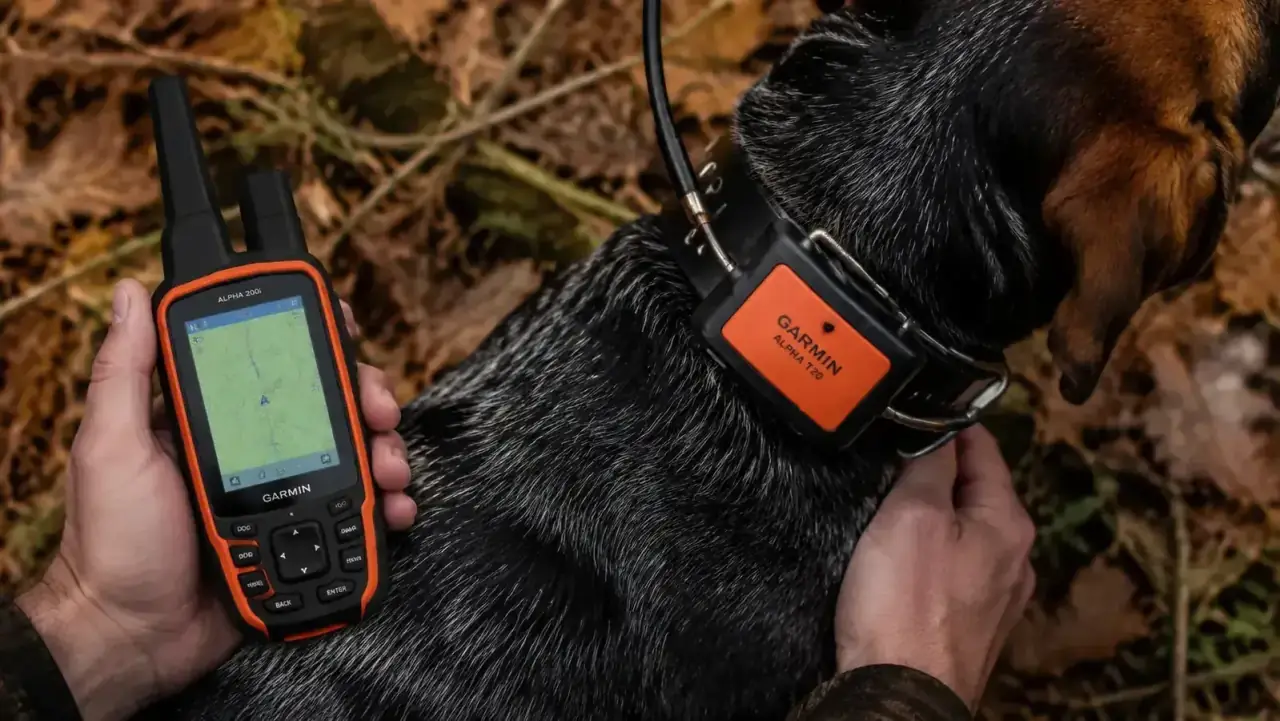
The Garmin Alpha T 20 skips the cell network entirely. The collar carries a GPS receiver that calculates position from satellites, then transmits that position directly to the Garmin Alpha handheld using UHF radio. The handheld is the receiver. Nothing else is in the chain. Garmin rates the radio range at up to 9 miles in open terrain. In dense timber you will see something closer to 1-3 miles, which is still far beyond what most hunters actually need. The update interval is every 2.5 seconds, quick enough to track a dog running hard through thick brush.
Where the Garmin Alpha T 20 Wins
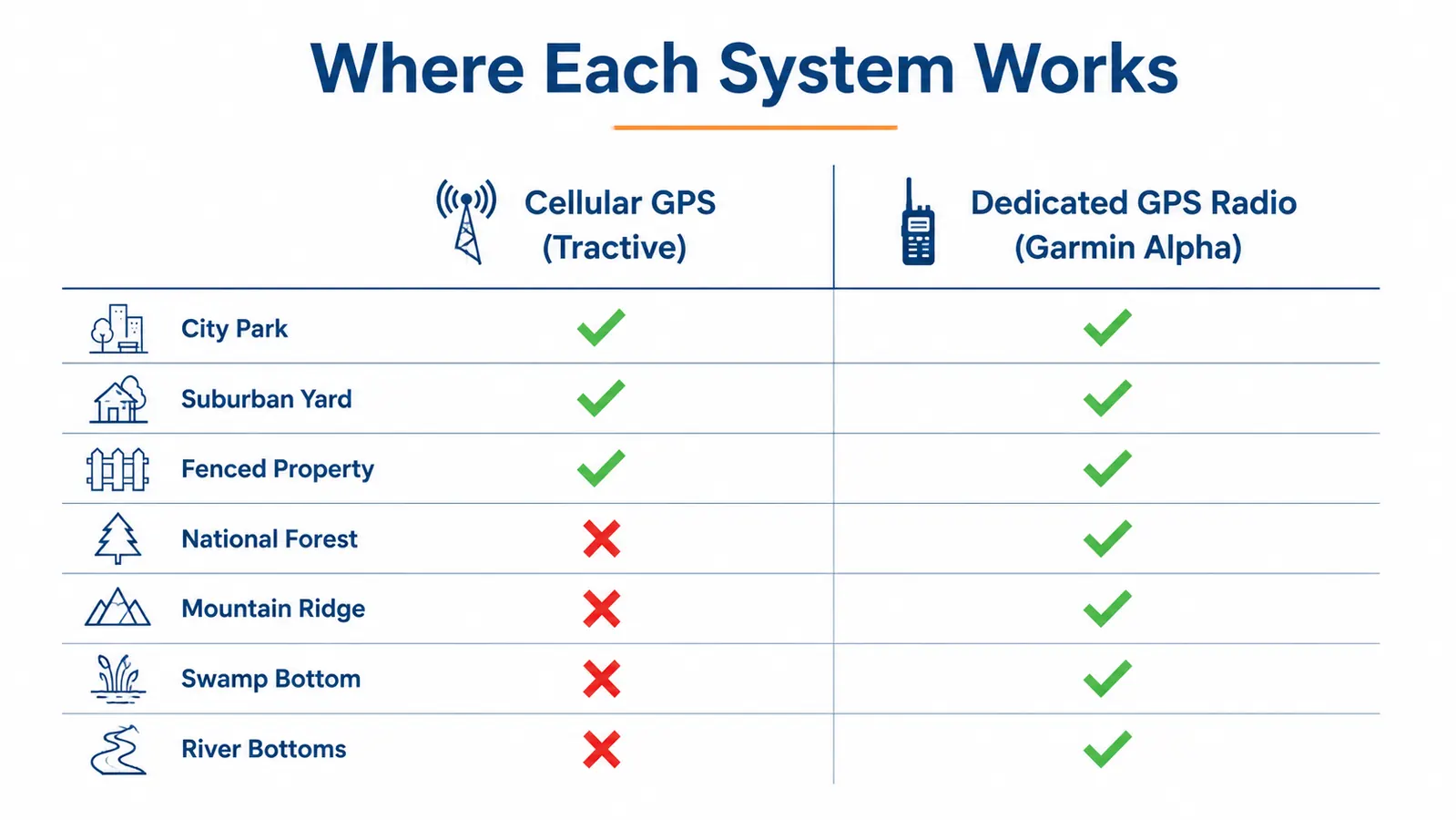
The clear win for the Garmin is any scenario where you cannot count on cell service. That covers most serious hunting in the American West and a lot of Southeastern swamp and river bottom hunting. National forests, wilderness areas, and public land in general tend to have spotty or nonexistent cellular coverage. The Garmin works the same on day one as it does 20 miles into the backcountry. You carry the handheld, the collar transmits, and the screen shows your dog's position on a topo map loaded onto the device.
The no-subscription structure is a genuine advantage if you hunt hard for several years. At $299.99 for the collar, the upfront cost is real. But over three seasons you will spend nothing more. Someone running a Tractive subscription at $12 per month will spend $432 over the same period, and still lose tracking the moment they leave the suburbs. The Garmin's long-term cost is lower for any hunter who uses it regularly in the field.
Durability is another category where the Garmin is purpose-built. The T 20 collar is rated IPX7, meaning it handles submersion to a meter for 30 minutes. It is built for dogs that work hard, swim, wallow, and occasionally get dragged through a briar patch. The housing is thick plastic over electronics designed for field use, not a lifestyle device.
Where Tractive Has the Edge
Tractive is a better product if your dog is a backyard escape artist, a suburban runner, or a dog you take to the dog park and worry might bolt. In those environments, cell coverage is reliable, and Tractive's smartphone app is genuinely polished. You can pull up a map on your phone, see live breadcrumb trails, set virtual fences that trigger alerts, and check your dog's activity stats. It is easy to set up and easy to hand to someone else, like a pet sitter or a family member who is not a tech person.
The battery life on Tractive in power-save mode also stretches to several days, which can be more convenient if you forget to charge overnight. The Alpha T 20 collar runs about 20 hours before it needs a charge, so discipline around charging before a hunt day matters. If you want a tracker primarily for everyday suburban life, the Garmin system is overkill in both cost and complexity.
A cellular tracker in a remote hunting area is not a backup plan. It is a blank screen at the moment you need it most. The Garmin Alpha system exists precisely because cell coverage is not a given where dogs work hardest.
The Honest Tradeoffs of the Garmin System
The Garmin Alpha T 20 collar is only part of the system. To use it, you need the Garmin Alpha handheld unit sold separately. That handheld runs around $550 at current prices. So a complete working system costs closer to $850 before you start. For a serious hunter who uses it over multiple seasons, that investment makes sense. For someone who hunts three weekends a year in areas with decent cell service, it may not.
There is no smartphone app for the Alpha T 20 off-grid tracking. Everything runs through the handheld. If you are used to the clean app experience of a consumer tracker, the Garmin interface will feel like a step back at first. It is a purpose-built tool, and the interface reflects that. The screen is readable in sunlight, the button layout makes sense with gloves on, and the topo maps are genuinely useful in the field. But it takes an hour of learning before you are comfortable with it, and the initial setup requires a pairing process that is not quite plug-and-play.
The collar is also heavier than a Tractive unit. At roughly 77 grams, it is noticeable on a smaller sporting dog. The Alpha T 20 is sized for pointing dogs, retrievers, hounds, and similar medium-to-large working breeds. If you run a small spaniel or a terrier under 30 pounds, the collar weight becomes a meaningful concern.
What the Cell Coverage Maps Actually Show
The carrier coverage maps on T-Mobile, Verizon, and AT&T websites all look impressive until you zoom into the actual terrain you hunt. Many national forest blocks, state wildlife management areas, and river bottom units that show as covered on those maps have real-world coverage gaps the moment you drop below a ridge or into heavy timber. The maps show the theoretical coverage of towers with line-of-sight. Dogs do not hunt with line-of-sight to the nearest tower.
The practical approach before buying any tracker: pull up the coverage map for the specific areas where you hunt and look honestly at what you see. If those areas are deep green, a cellular tracker can work. If there are gray zones, white spots, or heavy tree cover, a direct-radio system is the safer choice. Hunting dog loss is not a recoverable situation in many remote areas. The tracker you chose needs to work where you are, not where the marketing photos were taken.
What I Liked
- Works completely off-grid with no cell signal required
- Up to 9-mile radio range in open terrain, 1-3 miles in timber
- No subscription cost, ever
- 2.5-second position updates during an active hunt
- IPX7 waterproof for hard-working dogs in wet terrain
- Dedicated handheld with sunlight-readable screen and glove-friendly buttons
- Topo map display on the handheld unit
- Purpose-built for hunting and field trial use
Where It Falls Short
- Requires the Garmin Alpha handheld unit, sold separately (~$550)
- Total system cost around $850 before accessories
- No smartphone app for off-grid tracking
- 20-hour battery life requires charging before each hunt
- Heavier collar (approx. 77g), not ideal for small breeds under 30 lbs
- Learning curve on the handheld interface
- Not useful for everyday suburban tracking scenarios
Who Should Buy the Garmin Alpha T 20
The Garmin Alpha T 20 is the right tool for hunters who run dogs in any terrain where cellular coverage is unreliable. That means most national forest and public land hunting, wilderness bird hunting in the West, swamp and river bottom coon and hound hunting in the Southeast, and any upland hunting that takes you away from roads and towers. It is also worth considering for competitive field trials held on large properties where cell coverage may be hit or miss. If you hunt medium-to-large working breeds, the collar weight is fine. If you are already running other Garmin Alpha-compatible collars on a multi-dog setup, the T 20 plugs directly into that existing ecosystem.
Who Should Skip It
If your dog is primarily a suburban pet who escapes the yard occasionally, or if you hunt in areas with consistent cell coverage and want app-based tracking on your phone, a cellular tracker like Tractive is a simpler and cheaper solution. The Garmin system asks you to carry and manage a dedicated handheld device, pay a high upfront cost, and learn a new interface. For a family dog who wanders the neighborhood, that investment is not proportionate to the problem. Tractive is genuinely better for that use case.
Remote terrain hunters: the collar that cannot reach a cell tower cannot find your dog.
The Garmin Alpha T 20 GPS Dog Tracking Collar communicates directly to the Garmin Alpha handheld via UHF radio. No towers. No subscription. Tracks with a 2.5-second update interval up to 9 miles in open terrain. Built for the conditions where hunting dogs actually work.
Amazon Check Today's Price on Amazon →