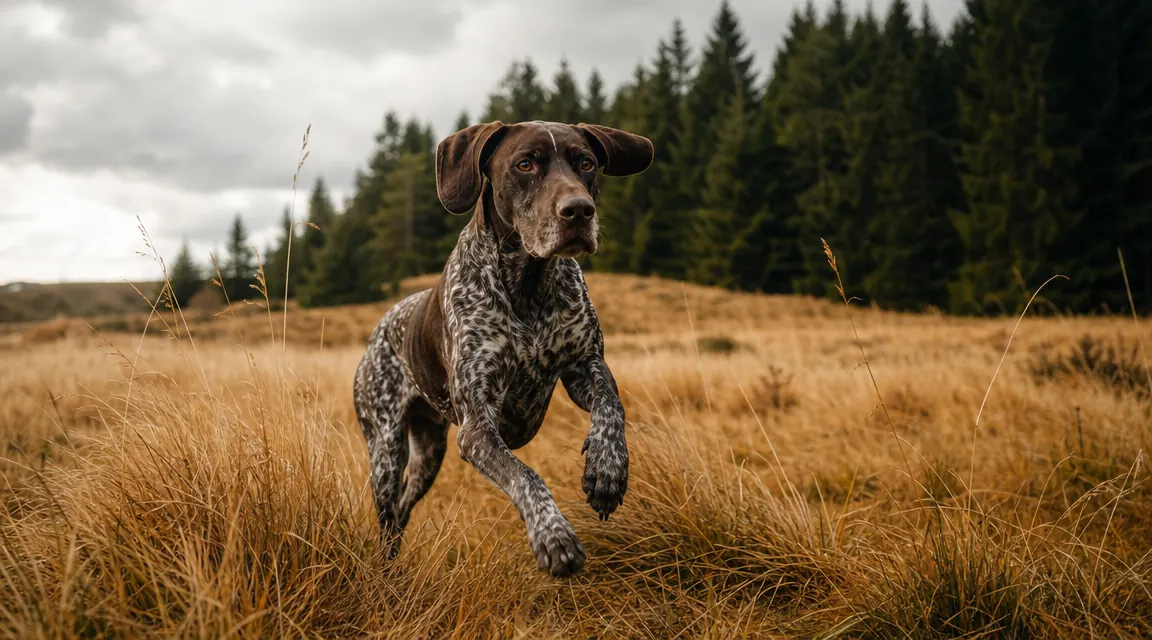
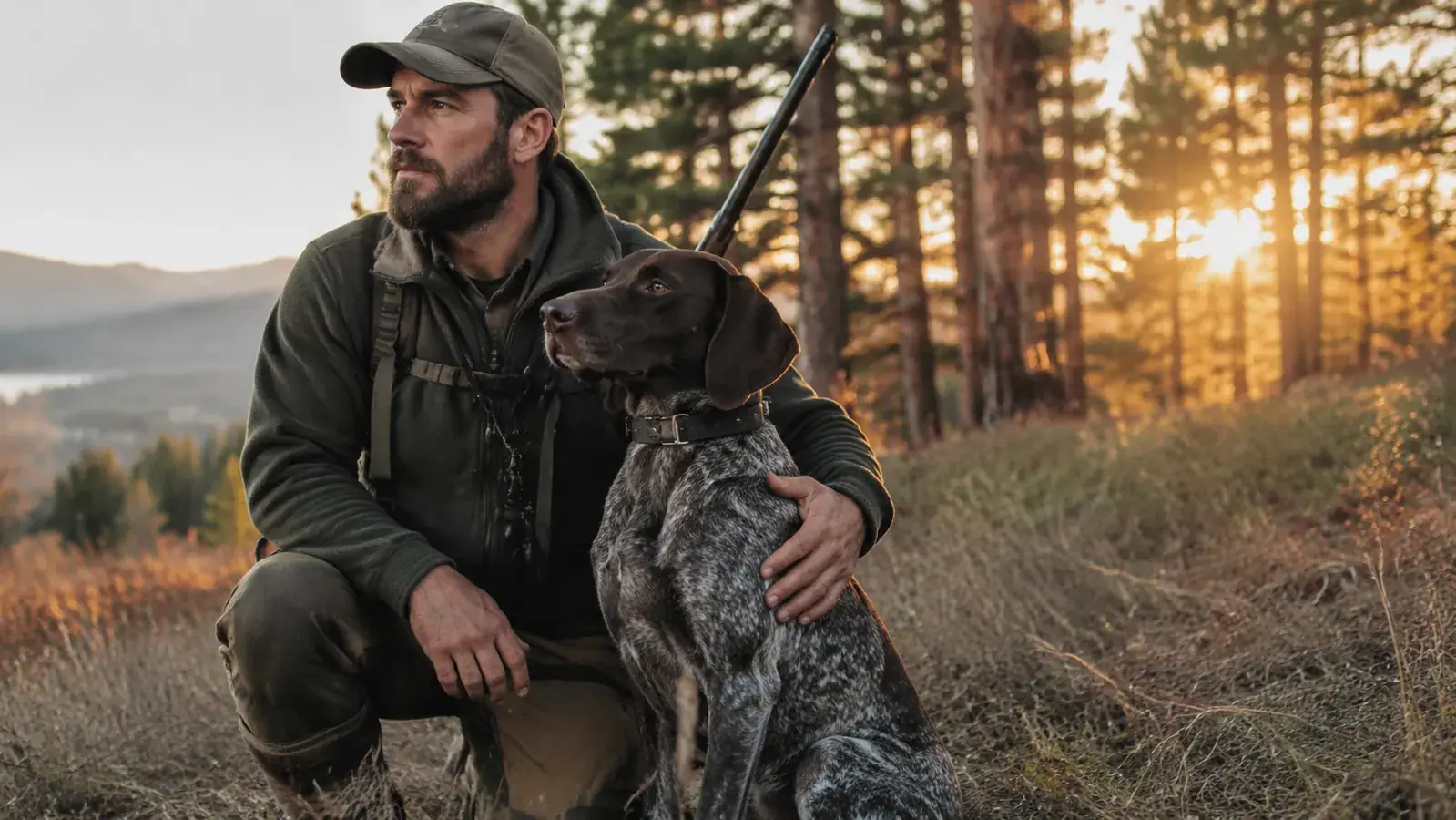
His name is Kestrel. He is four years old, sixty-two pounds, and the most biddable German shorthaired pointer I have ever owned right up until he locks onto a running pheasant. Then he is just gone. That is not a complaint. That is exactly what I bred him for. But it became a problem on the third Saturday of November last year, deep in a block of national forest in northern Wisconsin where your phone shows zero bars and does not even pretend otherwise.
I had been hunting a brushy coulee for about two hours when I heard Kestrel's bell go quiet. Without a Garmin Alpha T 20 GPS collar on him I would have been guessing at compass directions and burning daylight. That silence is normal when a dog goes on point, so I waited. I walked toward where I last heard it. Nothing. I called. Nothing. I climbed the ridge thinking he had pushed a bird and looped wide. Still nothing. At that point I had been in dense spruce for about twenty minutes and had no idea whether he was north, east, or already working his way back to the truck on his own. My phone was useless, three bars of "No Signal" mocking me from the top right corner of the screen.
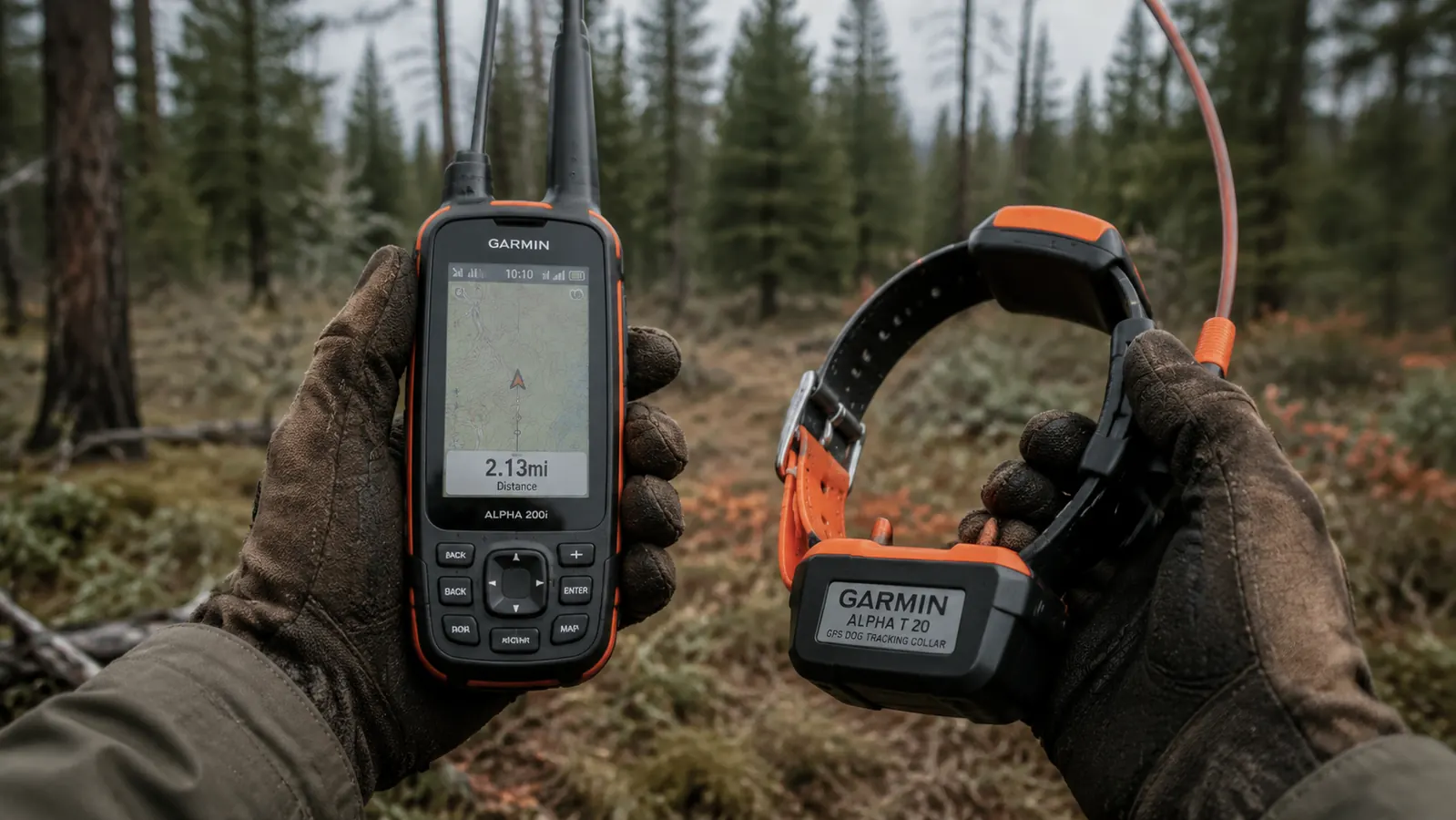
Here is what did not happen: I did not panic. I reached into my vest pocket and pulled out my Garmin Alpha handheld. The screen lit up. It connected to the T 20 collar on Kestrel's neck through direct radio, not cellular, not Wi-Fi, not any signal that requires a tower within twenty miles. The display read: Kestrel. 1.2 mi. NW. Moving.
The screen read: Kestrel. 1.2 mi. NW. Moving. In dead silence with zero cell bars, I knew exactly where my dog was.
That is the entire story, almost. But I want to slow down on that moment because it was not a small thing. I was standing in a block of national forest where my iPhone was a paperweight. And a handheld the size of a TV remote was painting a live GPS track of a sixty-two-pound dog running a mile-plus to my northwest. No subscription. No tower. No Wi-Fi. Radio waves between the collar and the handheld, exactly the way search-and-rescue teams work. Garmin has been doing this for hunting dogs for a decade and the Alpha T 20 collar paired with their Alpha 10 or Alpha 200i handheld is the current version of that system. I have the T 20 collar. It is the piece that goes on the dog. The handheld is sold separately, which I will address at the kitchen table in a minute.
I walked northwest. The distance ticked down. 1.1 miles. 0.9. At 0.6 miles I crested a low ridge and heard him before I saw him. He was locked on solid point, body rigid, nose aimed at a deadfall tangle. I flushed a rooster pheasant that had been sitting tight for who knows how long. Kestrel held steady until I released him. We hunted for another two hours. It was the best day I have had in four seasons.
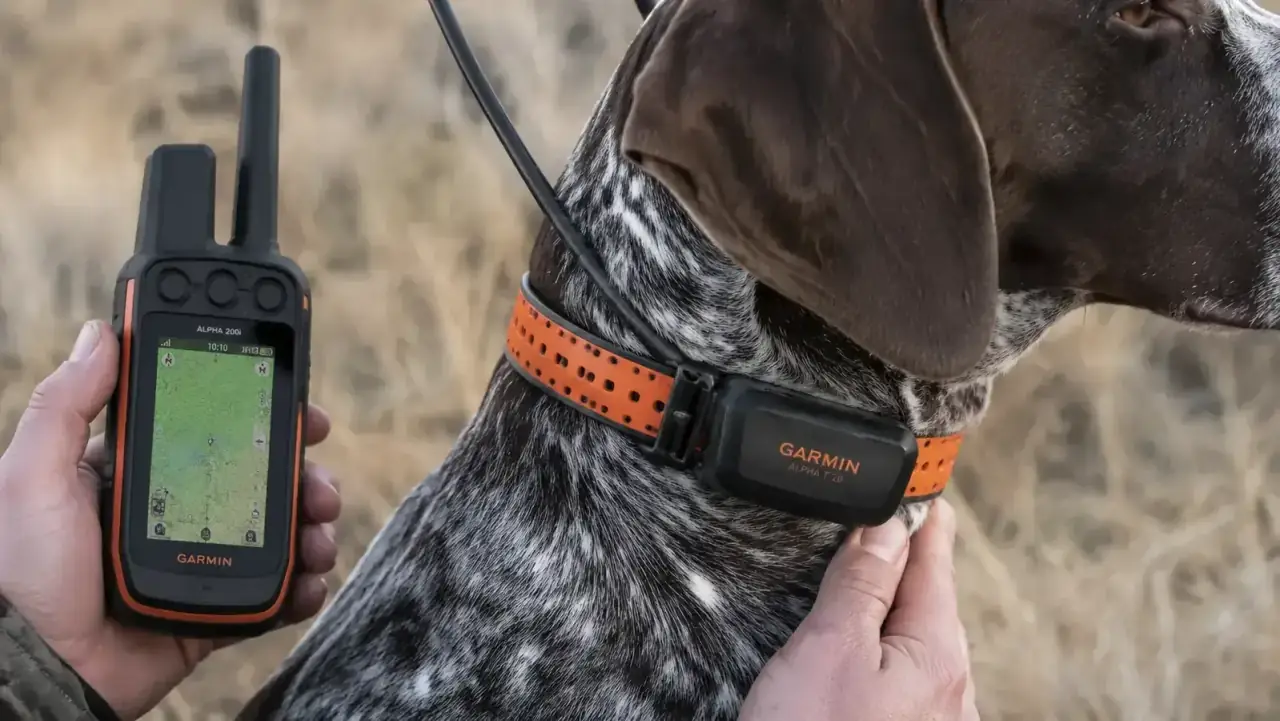
I want to be straightforward about what the Garmin Alpha system is and is not. The T 20 collar is a GPS collar that transmits your dog's position via radio directly to the Garmin Alpha handheld. The range on open terrain runs up to nine miles in ideal conditions. In timber and rolling terrain you get less, but in my experience across three hunting seasons something in the one-to-four-mile range is reliable. There is no monthly subscription for the basic tracking function. You buy the collar, you buy the handheld, and it works. Period. It does not require cell coverage. It does not require you to stand in a specific spot to catch a signal. This is the single reason it exists, and it is the single reason every serious bird dog hunter I know either already runs one or is saving up for one.
Your dog is hunting where cell coverage ends. The Alpha T 20 works there.
The Garmin Alpha T 20 GPS collar uses direct radio to your handheld. No cellular subscription. No signal tower required. Check current pricing and availability on Amazon.
Amazon Check Today's Price on Amazon →There are things worth knowing before you buy. The T 20 collar is the collar unit only. You need a compatible Garmin Alpha handheld to see your dog's location. The Alpha 10 is the more affordable entry point; the Alpha 200i adds a built-in mapping screen that is genuinely useful in the field. If you already own an older Garmin Alpha 100 or 200, the T 20 collar is backward-compatible. If you are starting from scratch, budget for both the collar and a handheld, and understand that the handheld is the piece you carry in your vest. The collar is the piece that takes the rain, the briars, and the creek crossings. Kestrel has dragged his through everything and it has not missed a beat. The collar charges via USB-C and battery life runs around 20 hours in GPS tracking mode, which gets you through any reasonable hunting day with margin to spare.
I have used cellular trackers before. I had a subscription GPS collar on my previous dog, a setter named Birch. It was fine in the farm country we hunted, where there were cell towers within a few miles. But I moved to hunting heavier country and the collar became a liability. Two different times I lost signal in areas that should have had coverage. Cellular GPS is only as good as the network underneath it. In national forests, wilderness areas, and the kind of out-of-the-way public land where birds actually live, that network is often not there. The Garmin system solves that problem at the root level by not depending on it at all.
What I Would Tell You If We Were Sitting at My Kitchen Table
If you hunt dogs in areas with reliable cell coverage and you are on a tight budget, a cellular tracker will probably serve you well. I am not here to talk you out of something that works for your situation. But if you hunt any public land, any national forest, any block of ground more than a few miles from the nearest small town, a cellular tracker is a gamble you are taking every time you let your dog off lead. The Garmin Alpha system is not a gamble. It is a radio. Radios do not need towers.
The honest tradeoff is cost. The T 20 collar plus a compatible handheld is a real investment. If budget is the question, read through my full field review of the Alpha T 20 for a detailed breakdown of the costs and whether the system makes sense for different hunters. But if you are the person who drives three hours to hunt public land in timber country, and you have a dog that costs you real money in training and vet bills, the math works out. One recovery like the day I described is worth the price of the whole system. Kestrel was not in danger that day, but I did not know that while I was standing in the spruce with a silent bell and a dead phone. That feeling is something you pay to never have again.
He is sleeping next to my boots right now. Season opens again in six weeks. The T 20 is charged and clipped to his collar. The Alpha handheld is in my vest. We are ready.
The Alpha T 20 works where your phone does not. That is the whole point.
Direct radio GPS tracking for hunting and sporting dogs. No cell signal needed, no monthly subscription for basic tracking. See the Garmin Alpha T 20 on Amazon and check today's price.
Amazon Check Today's Price on Amazon →