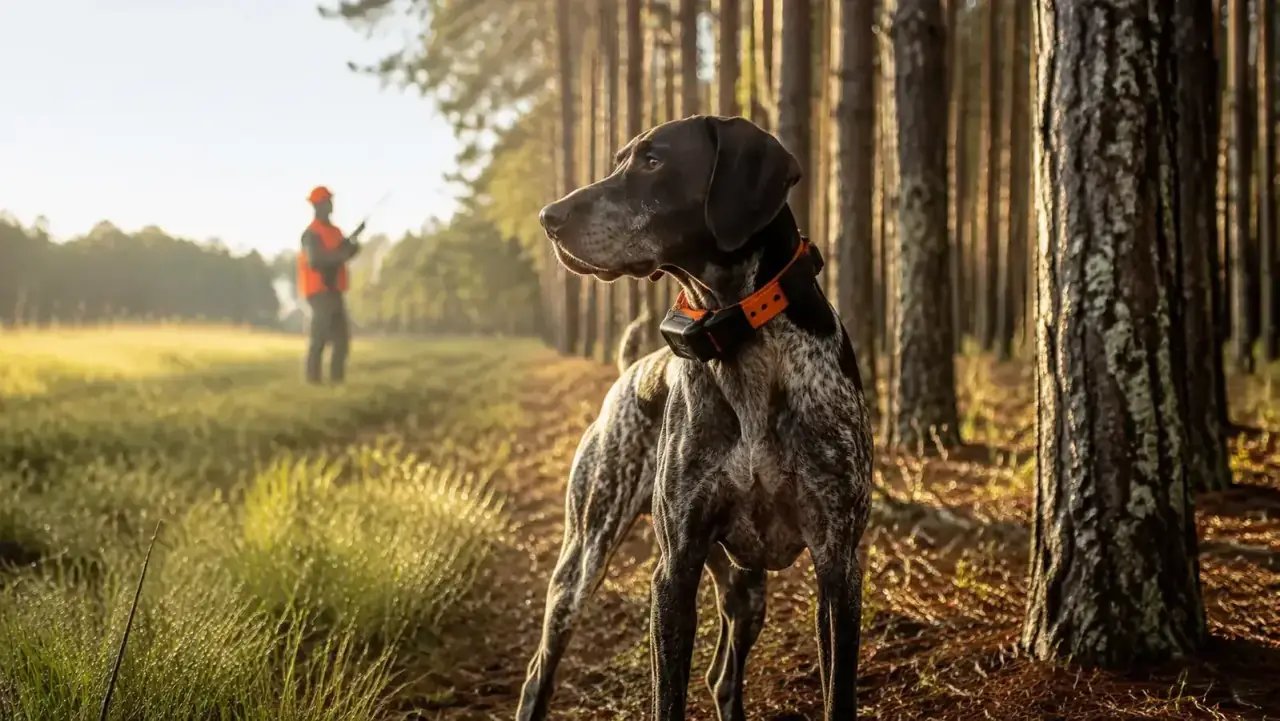
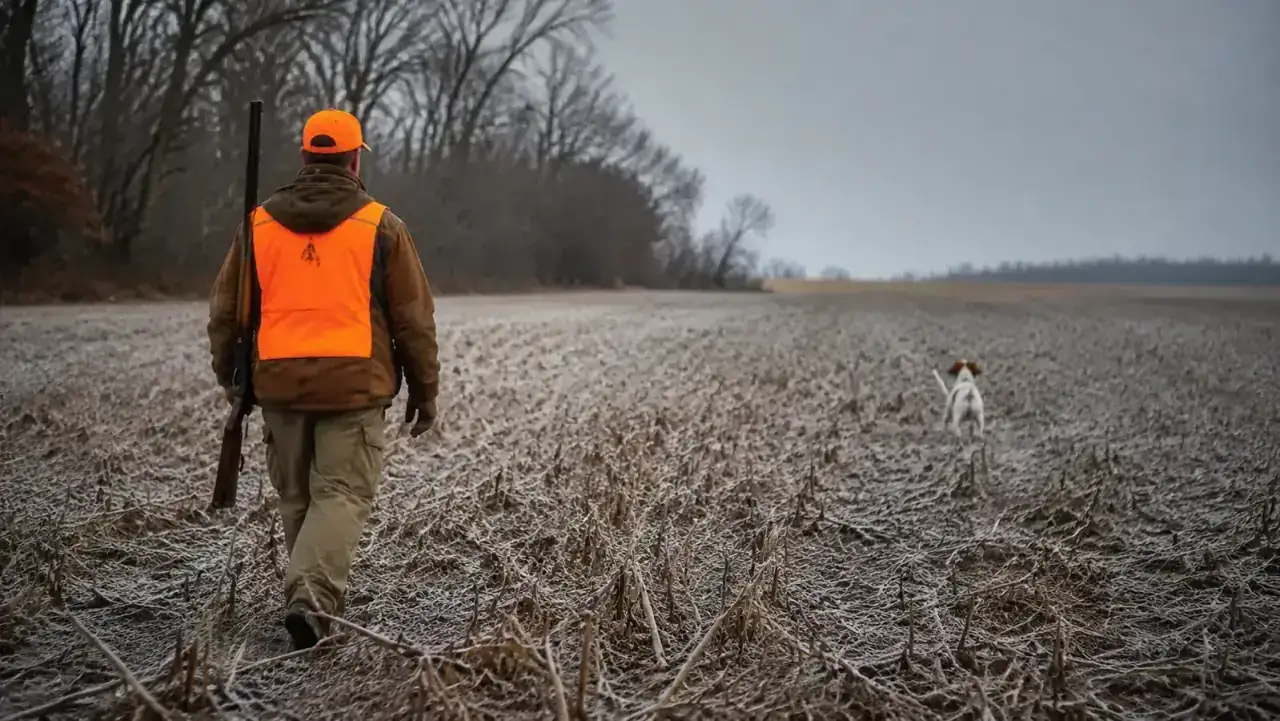
Copper is a four-year-old German Shorthaired Pointer, 58 pounds, and genuinely the worst dog you could possibly take into national forest if you needed him to stay close. He won't. That is what he is bred for. The first time he disappeared into a stand of Doug fir in northern Idaho and I stood there with nothing but a dying cell signal and a vague sense of direction, I understood immediately that my regular pet tracker was not going to cut it. The Garmin Alpha T 20 GPS Dog Tracking Collar changed how I hunt with him.
I have been running this collar on Copper for three hunting seasons now, through bird season in the stubble fields, through mule deer country in the breaks, and through the kind of dense pine timber where your phone shows zero bars for hours at a stretch. This is the long-term use review from someone who leans on this thing hard.
The Quick Verdict
The best purpose-built off-grid hunting dog GPS collar on the market. Direct radio link means it works exactly where cellular trackers go dark. The up-front cost is real, but there is no monthly fee and the range holds up in genuine backcountry conditions.
Amazon Check Today's Price →If you hunt in any area without cell coverage, this collar is the difference between finding your dog and searching all night.
The Garmin Alpha T 20 pairs with the Alpha handheld controller for off-grid direct radio tracking. No cell signal required, no monthly subscription, and up to a 9-mile range in open terrain.
Amazon Check Today's Price on Amazon →How I Have Used It: Three Seasons in Real Hunting Country
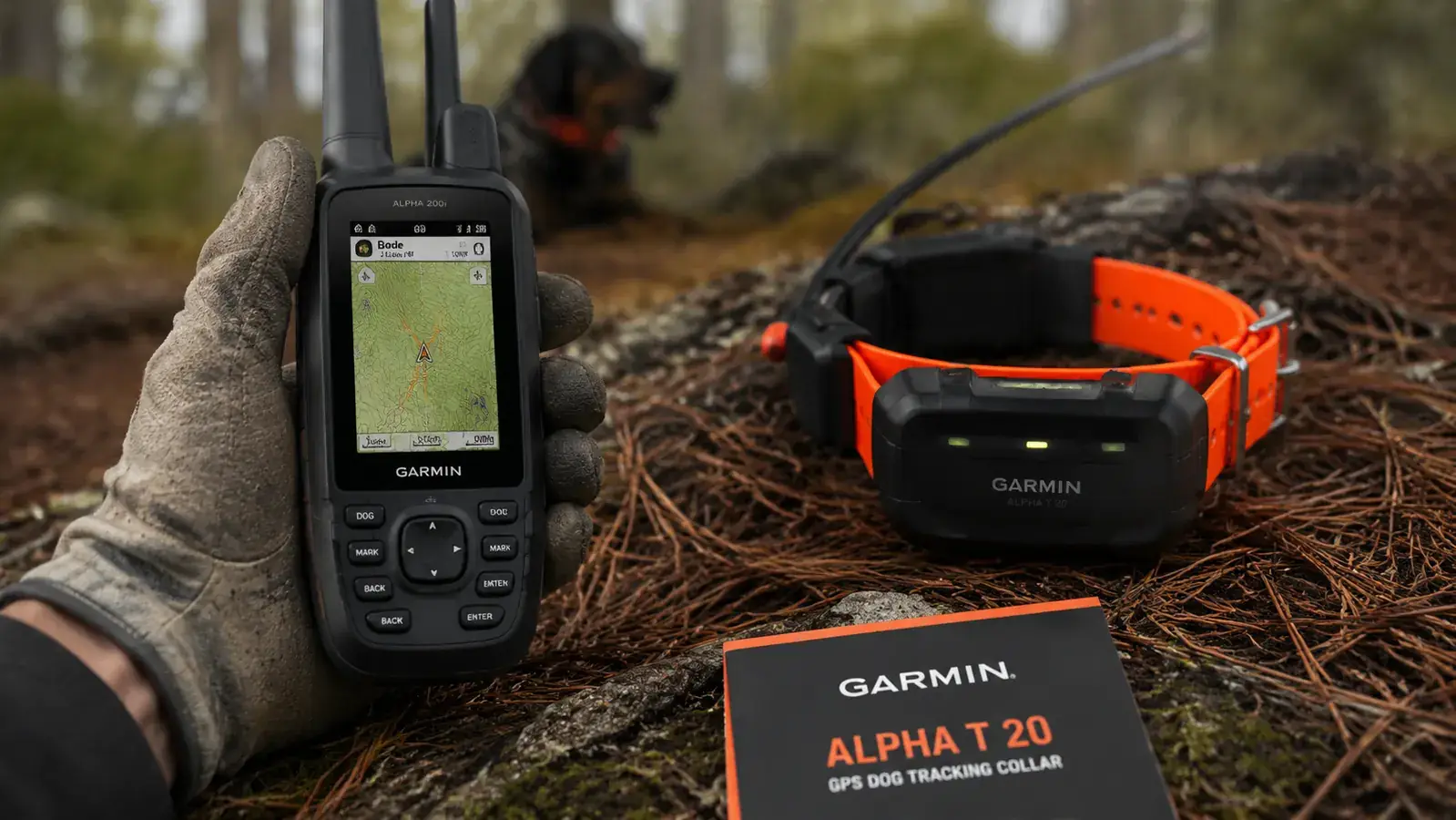
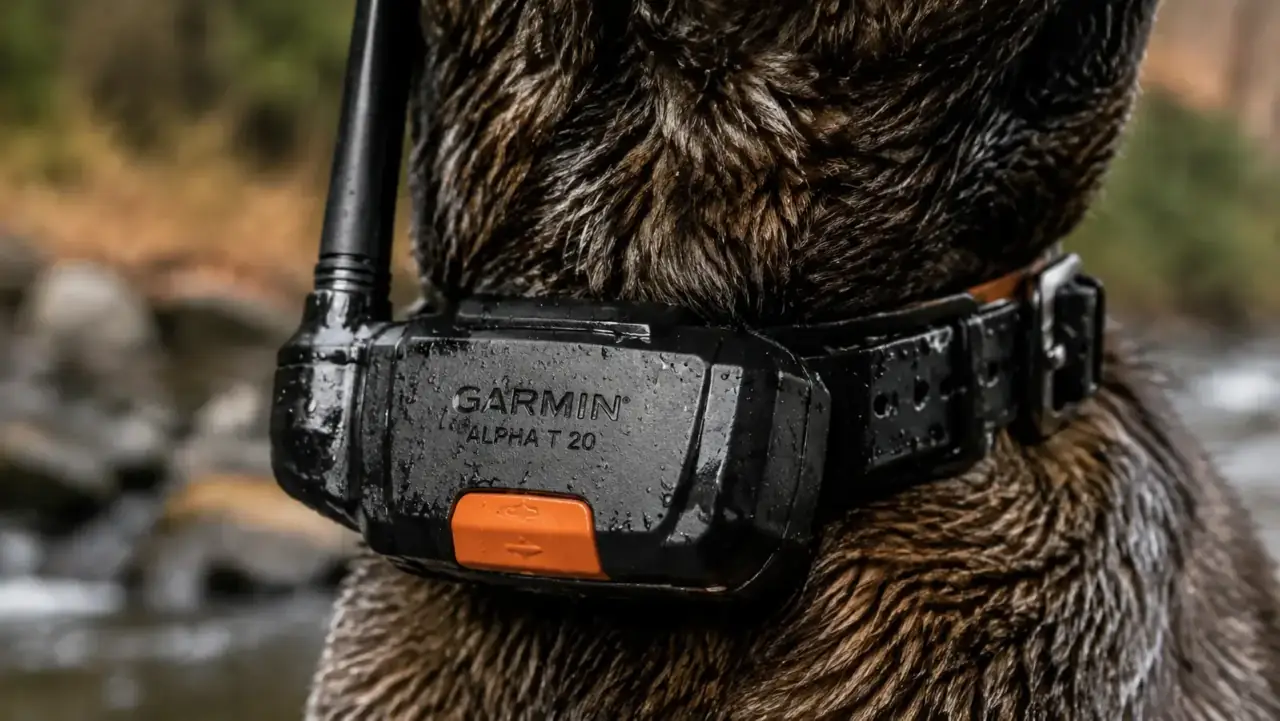
The Garmin Alpha T 20 is the collar unit in Garmin's Alpha system. It does not operate alone. You need the Alpha handheld controller, which is sold separately or as part of some bundles. The collar and handheld communicate over a direct radio link, not a cellular network, which is the whole reason it exists. When I am two ridges deep in the Clearwater and the nearest cell tower is a long drive away, the system still shows me exactly where Copper is on a topo map, updated every couple of seconds.
My typical setup: Copper wears the T 20 collar, I carry the Alpha handheld on my vest. The handheld shows his position as a moving dot on a map, his track history, and his speed. When he locks up on a point a quarter mile into the timber, I can see that he has stopped moving before I even hear him. That is genuinely useful information in the field.
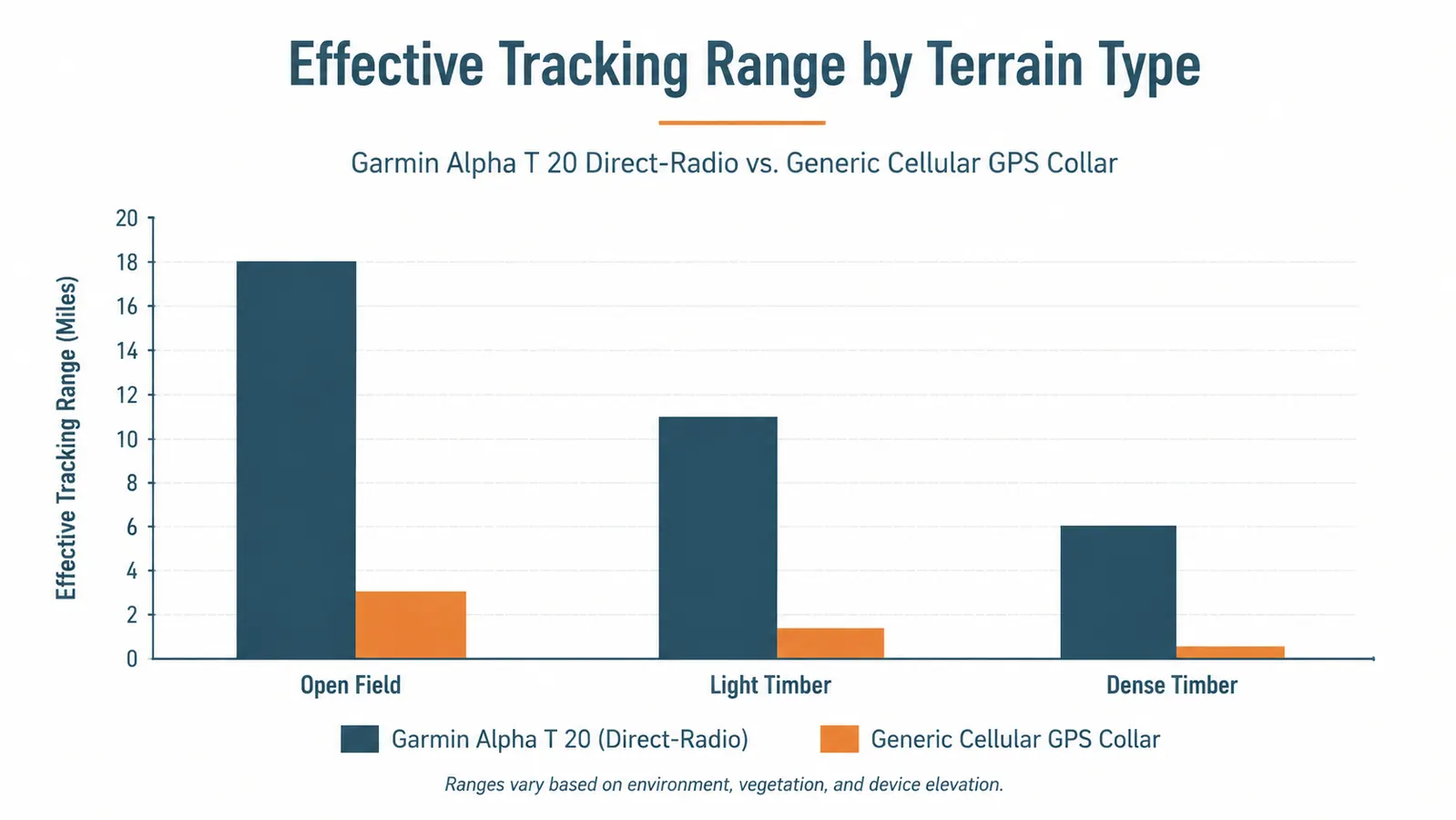
Over three seasons I have pushed this system to the edges of its rated range several times. In open terrain, the 9-mile claim is real. I personally verified contact at just over 7 miles on a high plateau last October. In heavy timber, expect to lose 40 to 60 percent of that range, which still leaves you with 3 to 5 miles in most hunting situations. That is well beyond what any cellular tracker can deliver in the same conditions, since cellular trackers depend entirely on carrier towers that are simply not there.
The Off-Grid Advantage: Why Direct Radio Beats Cellular in the Field
This is the single most important thing to understand about the Garmin Alpha system versus every cellular GPS tracker on the market. Cellular trackers like Tractive, Whistle, and Fi depend on your carrier's network to relay the dog's location to your phone. That is fine in a suburban backyard. It is useless in the backcountry.
The T 20 does not use cellular at all. The collar and the handheld talk directly to each other over Garmin's dedicated radio frequency. There are no towers involved, no data plans, no subscription required. The system works identically whether you are in a parking lot with full bars or on a ridge in Wyoming with nothing. That consistency is what makes it the right tool for hunting dog tracking.
I have tested cellular trackers on Copper specifically to understand the difference. In terrain with solid coverage, they work well enough. The moment I drop into a canyon or push into the timber, the location updates stop. Sometimes for 10 minutes at a time. With the Alpha system, I have never had a gap like that. The radio link has dropped exactly twice in three seasons, both times because of a dense rock formation between us, and both times it re-established in under 30 seconds when I moved.
Battery Life in Real Cold-Weather Conditions
Garmin rates the T 20 collar at approximately 20 hours of battery life in standard conditions. In my experience hunting in October through December in northern Idaho, where temperatures regularly drop into the low 20s Fahrenheit, I see 14 to 16 hours of actual runtime. That is enough for a full hunting day with margin. I charge both the collar and the handheld the night before every hunt as a habit, and I have never had either die in the field.
Cold weather does reduce lithium battery efficiency, and Garmin is honest enough that this will happen. On a particularly cold November morning at around 18 degrees, I started the day with a full charge and finished a 9-hour hunt with 28 percent remaining on the collar. That is a comfortable buffer. The charging port on the collar is covered by a rubber cap that stays put even after getting knocked around in the truck bed.
Rugged Construction: What Three Seasons of Abuse Looks Like
Copper has dragged the T 20 through creek crossings, rolled in mud with it on, crashed through blackberry thickets, and had it bounced across gravel roads when he jumped out of the truck before I was ready. The collar housing has scuffs and scratches that tell that story. It has never malfunctioned.
The waterproofing holds up. Copper is not a dog who avoids water. He has submerged the collar in creeks up to about 18 inches, and I have never had water cause a problem. The antenna feels solid and shows no signs of loosening despite three years of regular use. The collar strap itself is contact-points rubberized where it sits against the neck, which helps keep it in place during hard running. I replaced the strap at the start of season three as a precaution, not because it failed.
The handheld controller is equally tough. I have carried it in a vest pocket, dropped it in the field twice, and gotten it wet more times than I can count. The screen is easy to read in bright sunlight, which is not something you can say about every GPS unit. The button layout is logical enough that I can navigate it with gloves on without looking down.
Tracking Multiple Dogs: A Note for Hound Hunters and Field Trial Folks
One Alpha handheld can track multiple T 20 collar units simultaneously. If you run a brace of bird dogs, a pack of hounds, or participate in field trials where multiple dogs are working at once, this matters. Each dog shows as a separate track on the topo map. You can set different colors per dog, which makes reading the screen faster when things get busy.
I only run Copper, so I use this feature lightly. But I have been out with other hunters in our group who run two and three dogs at once on the same system, and the display handles it cleanly. The key thing is that each additional T 20 collar does require its own purchase, and the handheld is shared. For hound hunters who spend a lot of time tracking dogs across large properties or national forest boundaries, the ability to see all dogs on one screen without a subscription is a meaningful cost advantage over per-dog cellular subscriptions.
The radio link has dropped exactly twice in three seasons, both times because of a dense rock formation between us. With cellular trackers, I used to see 10-minute gaps in coverage just entering the timber.
What I Liked
- Works completely off-grid via direct radio link, no cell coverage required
- Up to 9-mile range in open terrain, 3 to 5 miles in heavy timber
- No monthly subscription fee after the initial purchase
- Rugged and genuinely waterproof across three seasons of hard use
- Tracks multiple dogs simultaneously on one handheld
- 20-hour rated battery life, 14 to 16 hours in cold weather conditions
- Topo map display on the handheld with track history and dog speed
Where It Falls Short
- Handheld controller is required and sold separately, adding to total cost
- Higher up-front price point compared to cellular trackers
- No smartphone app integration, you use the dedicated handheld only
- Collar unit is larger and heavier than cellular trackers, noticeable on smaller dogs
- Range drops significantly in dense timber and canyon terrain
Who This Is For
The Garmin Alpha T 20 is built for hunters and sporting dog owners who regularly work dogs in areas without reliable cell coverage. Bird hunters working national forest or BLM land, hound hunters running dogs across large rural properties, field trial participants, and search-and-rescue dog handlers all fit this profile. If you spend more than a few weekends a year in terrain where your phone shows no signal, this system will earn its price inside the first season. The lack of a monthly fee means the math looks better the longer you run it.
Who Should Skip It
If your dog mostly stays in a suburban neighborhood, a dog park, or a fenced property, the Alpha system is more capability than you need at a cost that does not match the situation. A cellular tracker with a monthly subscription will serve you better at a lower up-front cost, because you actually have cell towers nearby where those systems work as designed. The Alpha is a specialized tool for a specific situation. It is very good at that situation, and not designed for the casual backyard use case.
Also worth noting: if you want a smartphone app to show your dog's location to non-hunters at home while you are in the field, this system does not do that. The location data lives on the handheld only. Some hunters see that as a limitation. I see it as simplicity that does not depend on data coverage I do not have.
Alternatives I Considered
Before settling on the Alpha system, I tried a cellular GPS tracker for one season. It worked fine at the trailhead and on the drive home. In the timber, it was useless for hours at a time. I also looked at the Garmin Astro system, which is the predecessor to the Alpha line. The Alpha is newer, with a smaller collar profile, faster position updates, and a cleaner handheld display. For anyone starting fresh today, the Alpha T 20 is the right choice over the older Astro hardware.
For a direct head-to-head look at how the Alpha T 20 stacks up against cellular options, see the full comparison in our article on the Garmin Alpha T 20 vs Tractive off-grid tracking showdown. If you are still figuring out whether a dedicated hunting dog GPS is the right category for your situation, the breakdown in our 10 reasons hunting dogs need a dedicated off-grid GPS collar covers the decision well.
Final Verdict After Three Seasons
The Garmin Alpha T 20 is the most reliable tool I have for keeping track of Copper when the stakes are real. Three seasons, hundreds of hours of field time, no meaningful failures. The up-front cost is significant. The ongoing cost is zero. If you hunt with a dog in country where cell coverage is a distant memory, there is not a better option I know of at this price point. The direct radio link is not a marketing differentiator. It is the actual reason this system works when everything else does not.
Three seasons in, I would buy it again without hesitation. The off-grid radio link is not a feature, it is the whole point.
The Garmin Alpha T 20 GPS collar is the collar unit you pair with the Alpha handheld for direct radio tracking up to 9 miles. No monthly fees, no cell coverage required. Built for real hunting conditions.
Amazon Check Today's Price on Amazon →